The project Bridge is co-funded by the European Union. Views and opinions expressed are however those of the author(s) only and do not necessarily reflect those of the European Union or the Servicio Espanol para la Internacionalizacion de la Educacion (SEPIE). Neither the European Union nor the National Agency SEPIE can be held responsible for them. -- Number: 2025-1-ES01-KA220-HED-000359236 --

A museum. Seven Challenges. Four spaces to learn and transform

Documentary Photography

This is a collection of photographs or images related to the selected social challenge. Each image is accompanied by a brief description or narrative explaining its meaning and connection with the challenge.

A.6. Deficits in democratic participation, representation and inclusive governance   Show all

Photography can be a pedagogical tool for pausing to observe and activating situated critical reflection on everyday situations that often go unnoticed. When discussing a photograph, the group can begin by describing what they observe, then share different interpretations and ask what information… Read more >>

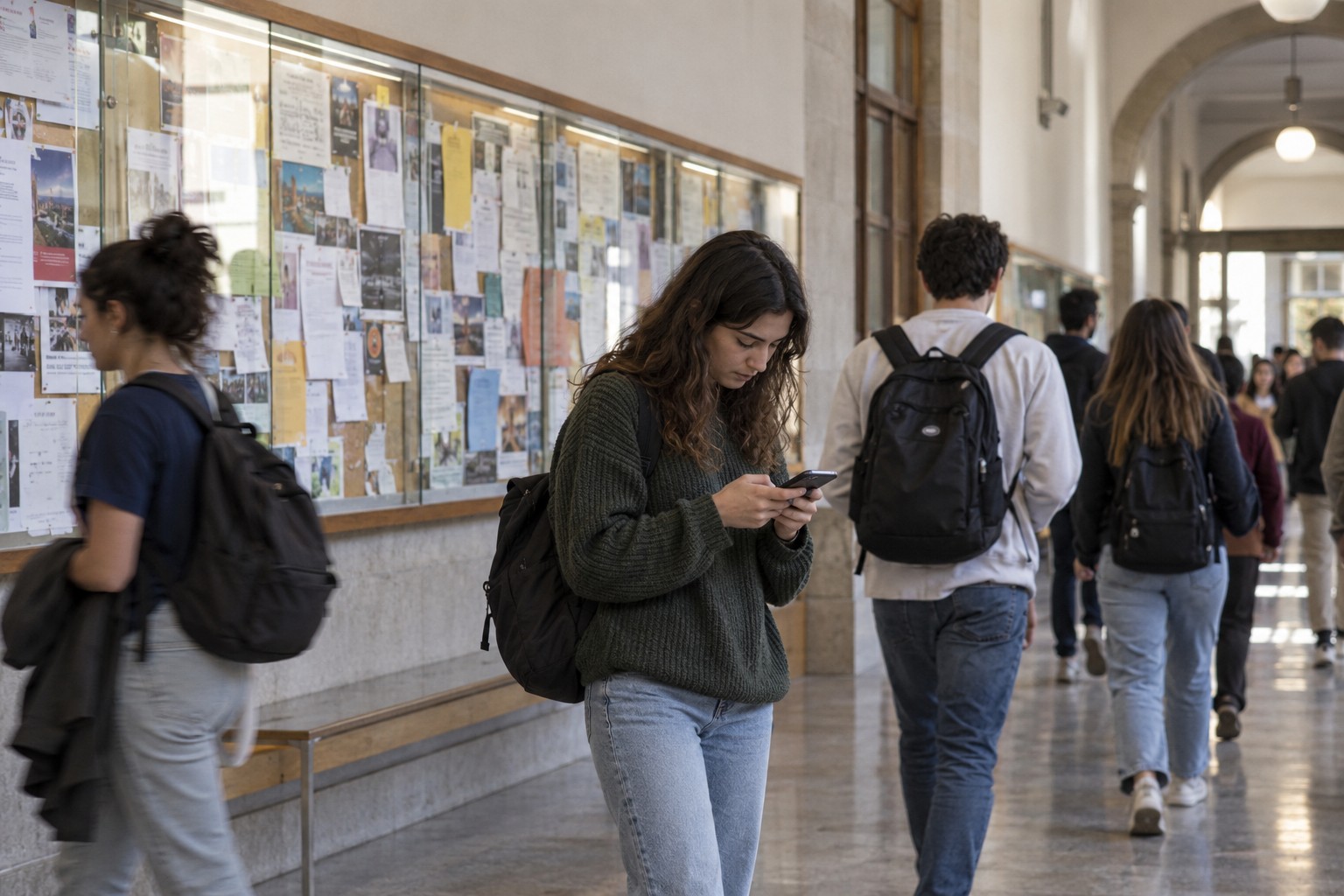
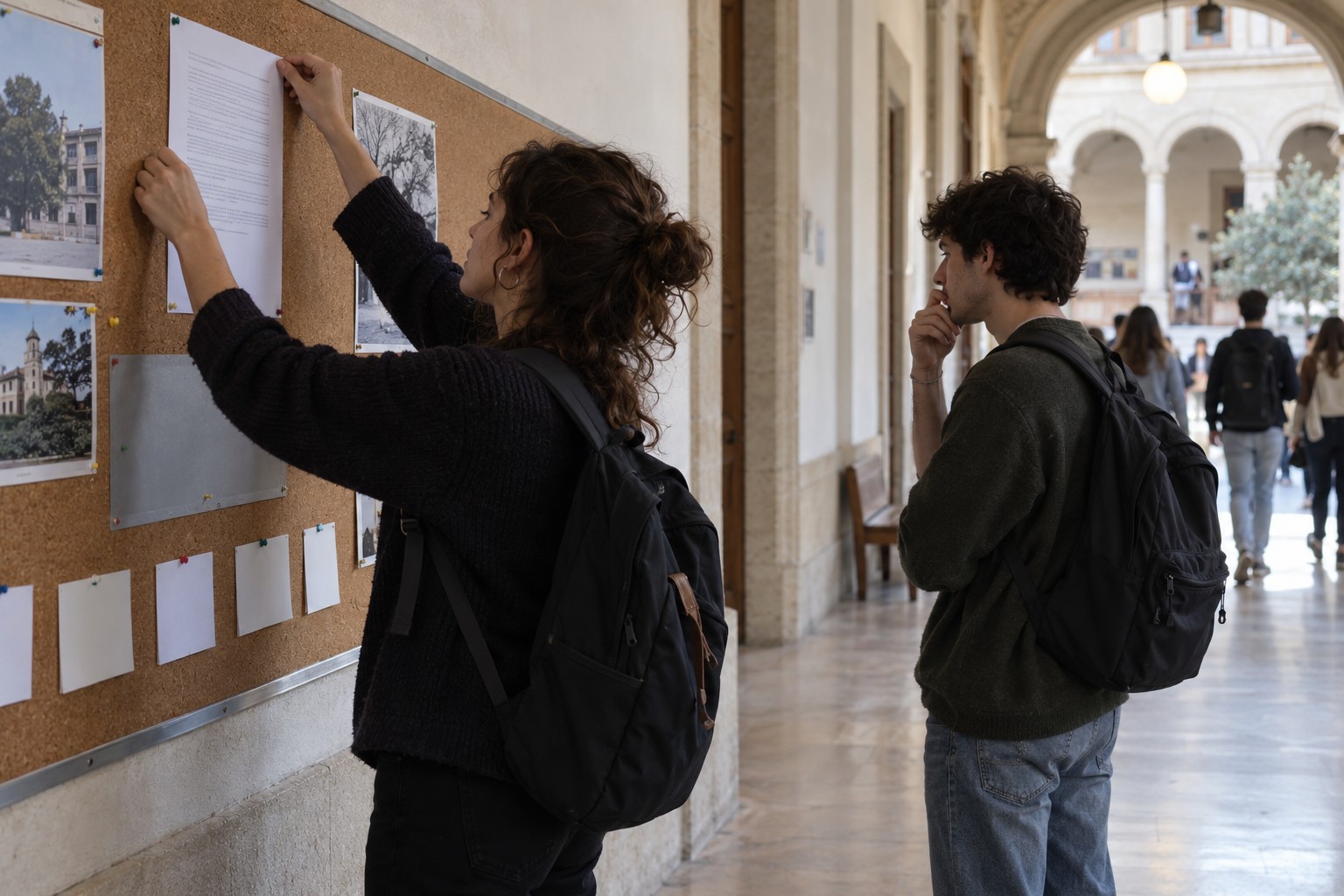
Information that doesn’t reach its destination

A university noticeboard displays announcements and invitations to participate. The existence of public information does not guarantee that it reaches those who could use it: its location, how frequently it is updated, its clarity and its dissemination through other channels all matter. The photograph prompts questions such as: who knows that an opportunity exists, how far in advance do they find out, and what must they do to take part? In Challenge A6, it opens up an analysis of the information barriers that precede any collective decision. Question for discussion. How do students find out about decisions in which they could have a say?

.. continue >>
Source: Image generated using generative AI for the BRIDGE project.
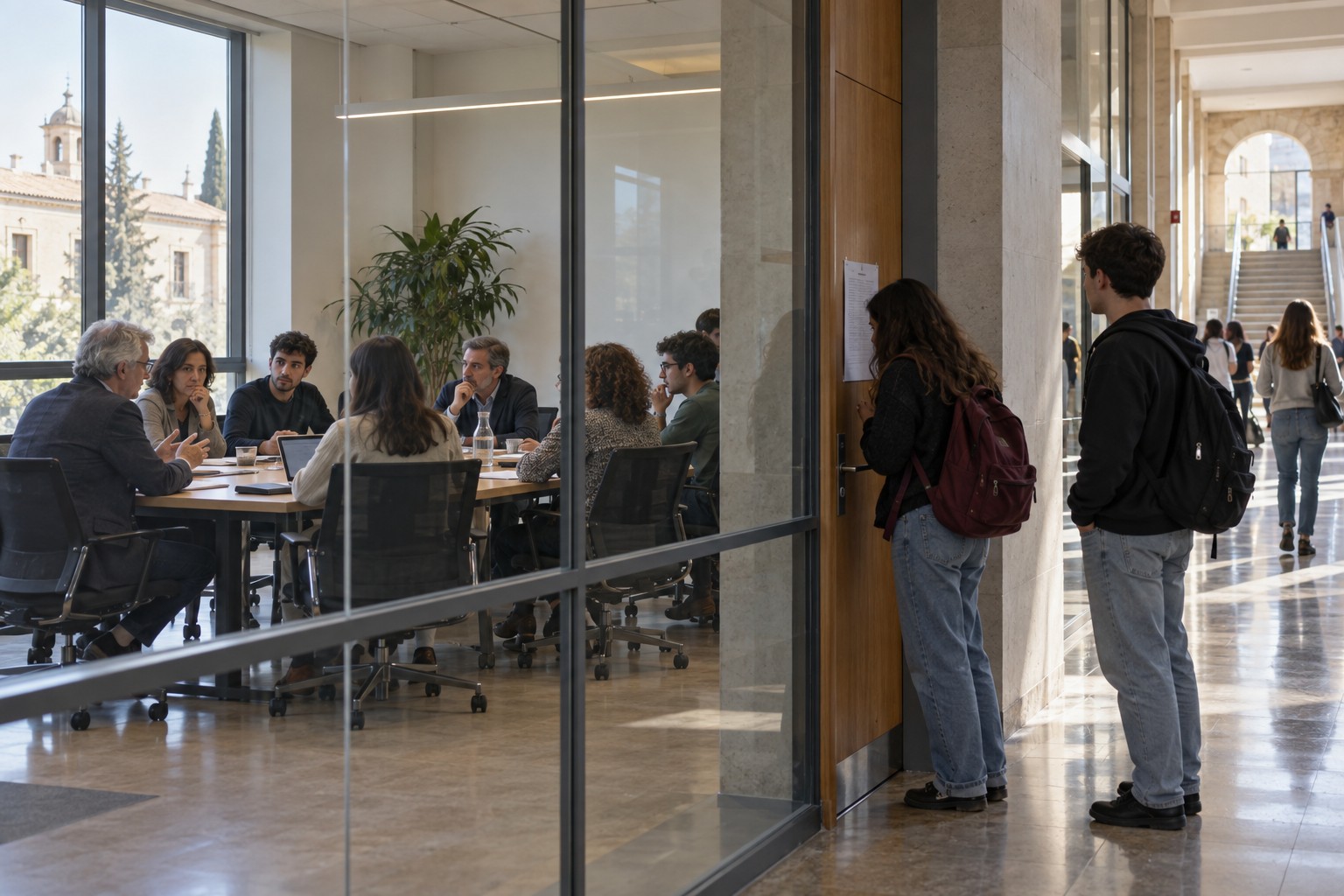
Participation behind the glass

A meeting is taking place in full view of those passing along the corridor, but the image does not reveal who is allowed to enter, who set the agenda, or how those present were selected. The scene invites an investigation into the formal rules and actual practices of representation. Seeing a decision-making body does not mean understanding it or being able to influence it. In Challenge A6, this helps to distinguish between transparency, access, representation and effective decision-making capacity. Question for discussion. Who is allowed to attend this meeting, and how are the absent voices incorporated?

.. continue >>
Source: Image generated using generative AI for the BRIDGE project.
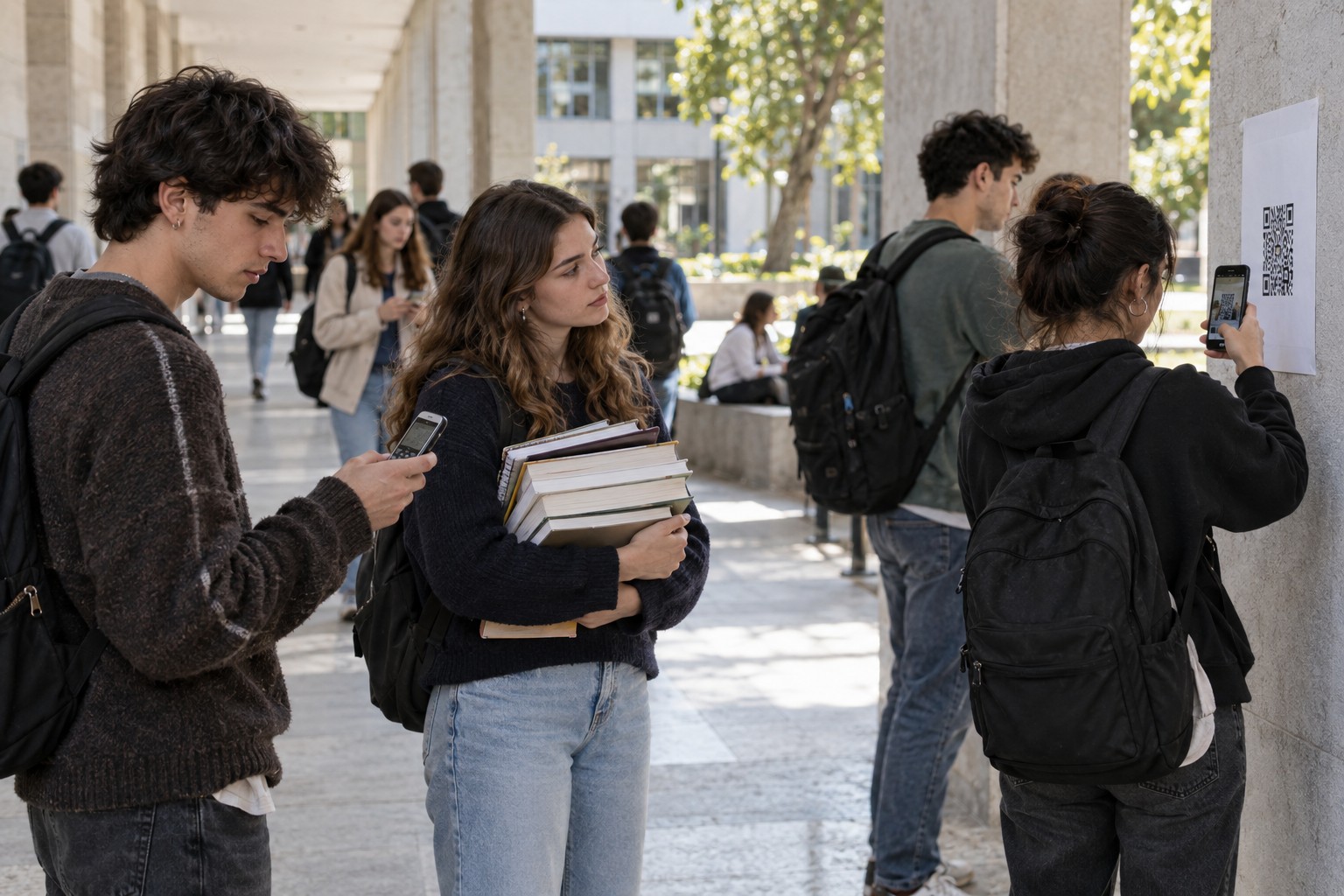
An invitation with a digital requirement

A QR code offers a quick way to receive information or respond to a consultation. The scene raises the question of whether there is an alternative for those who lack an internet connection, a device, the time or familiarity with this channel. It does not allow us to infer anyone’s capabilities from their appearance. Rather, it invites us to examine the design of the mechanism. In Challenge A6, it helps us to observe how a useful tool can broaden participation for some people whilst limiting it for others. Question for discussion. What options are there for taking part without relying on one’s own mobile phone?

.. continue >>
Source: Image generated using generative AI for the BRIDGE project.
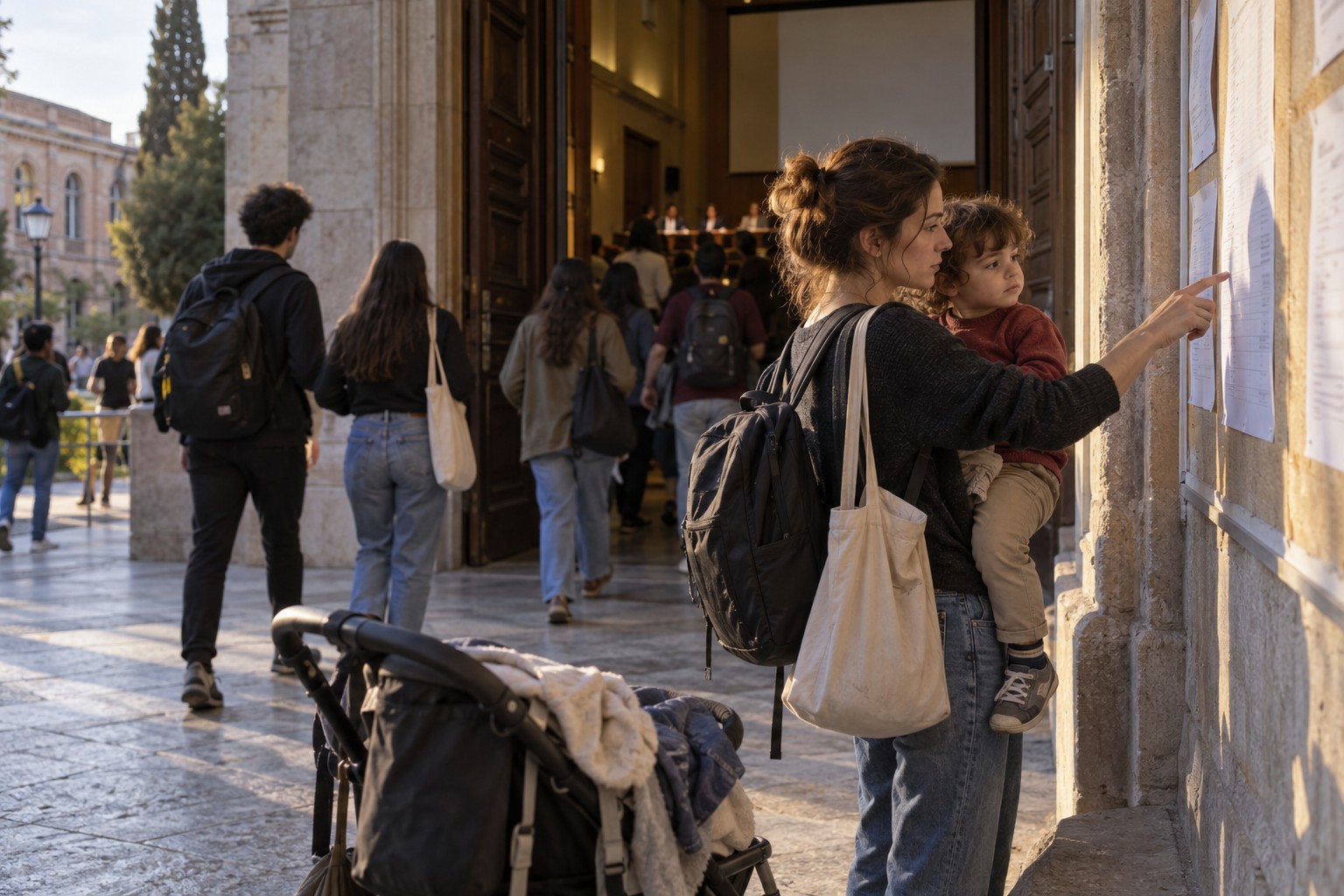
The time of day also matters

A student reads an announcement while caring for a young child as other people make their way to the meeting. We do not know whether she will ultimately be able to take part. It is precisely this uncertainty that prompts questions about timings, duration, childcare and the support available. In Challenge A6, the image highlights that simply opening a meeting up to everyone is not enough if life circumstances prevent people from attending or staying for the duration. Question for discussion. Who does the chosen timetable favour, and what alternatives could be offered?

.. continue >>
Source: Image generated using generative AI for the BRIDGE project.
Who has the floor?

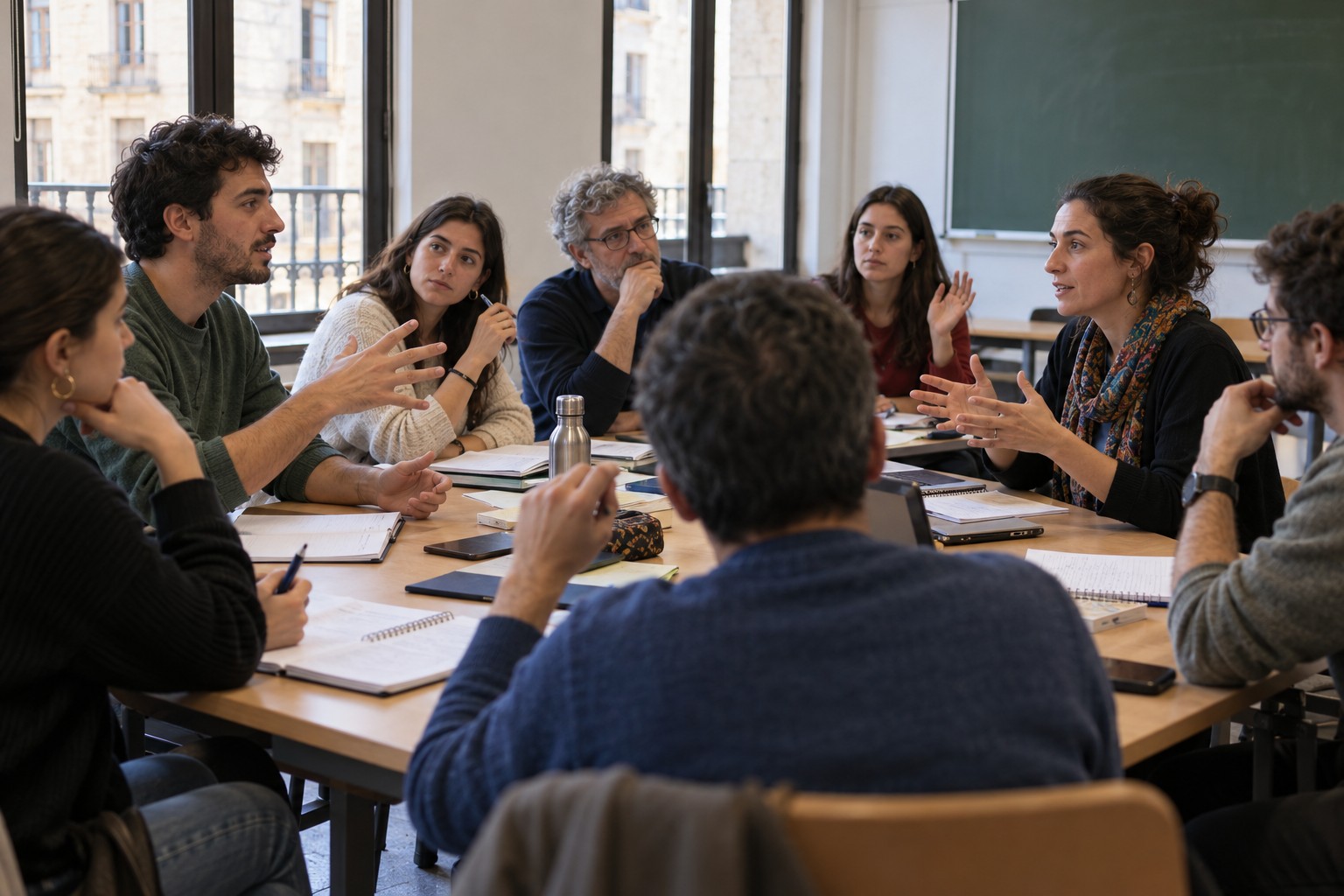
In a classroom discussion, several people try to speak whilst the floor is shared unevenly. A photograph captures a single moment and does not allow us to gauge who spoke the most throughout the session; it can, however, prompt observation of speaking turns, interruptions, listening and forms of moderation. In Challenge A6, the scene invites us to distinguish between simply being present and having a genuine opportunity to put forward a suggestion and have it considered. Question for discussion. How are speaking turns distributed, and what happens next with each contribution?

.. continue >>
Source: Image generated using generative AI for the BRIDGE project.
The faces of representation

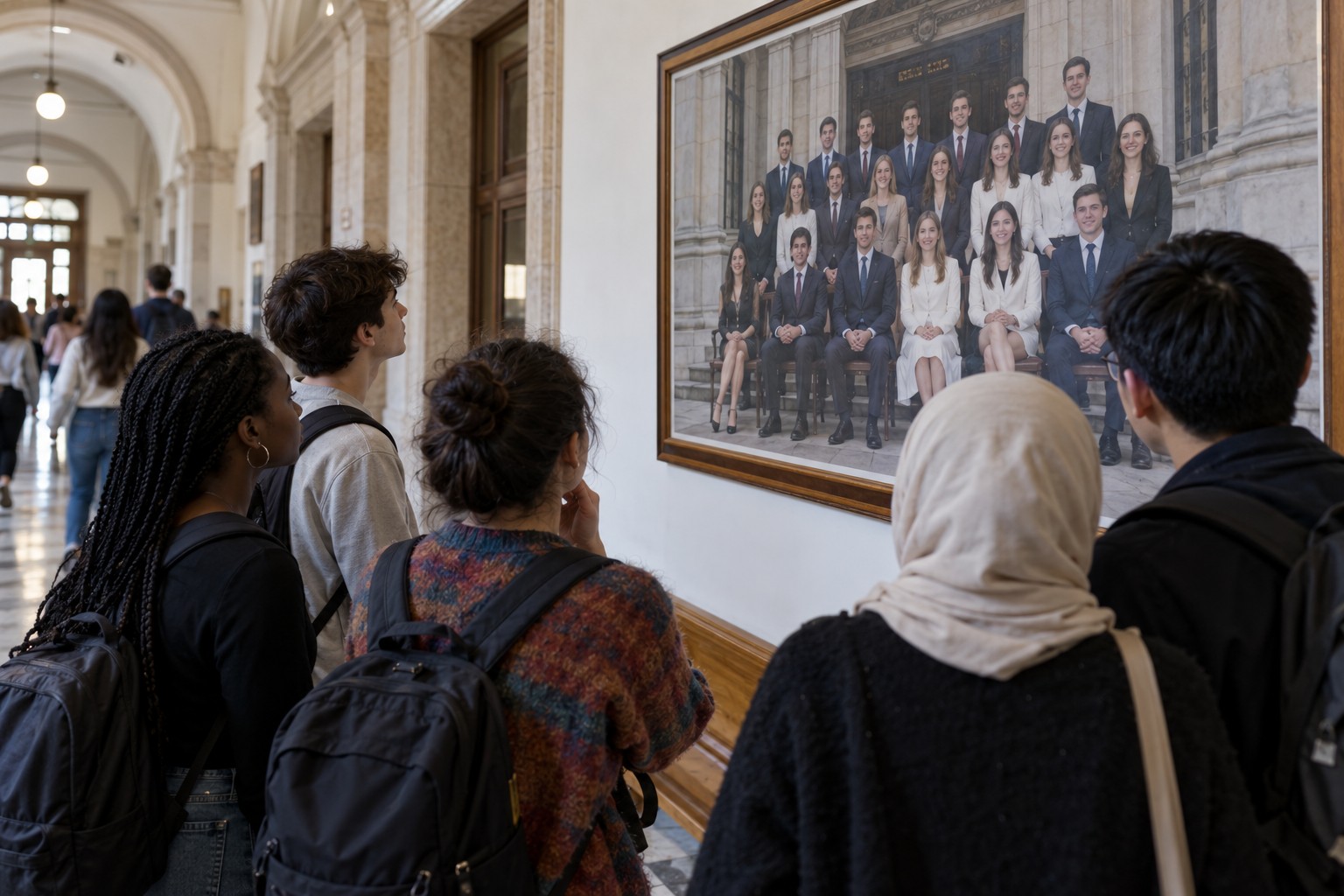
A group of students looks at a photograph of a representative body. The image does not reveal the identities or backgrounds of those pictured. It does, however, raise questions about how representatives are elected, what range of experiences is brought into such forums, and what links they maintain with the student body as a whole. In Challenge A6, it enables an analysis of representation that goes beyond a visual impression: its procedures, its legitimacy and its accountability. Question for discussion. How do the people represented find out about the decisions taken on their behalf?

.. continue >>
Source: Image generated using generative AI for the BRIDGE project.
The entrance that separates

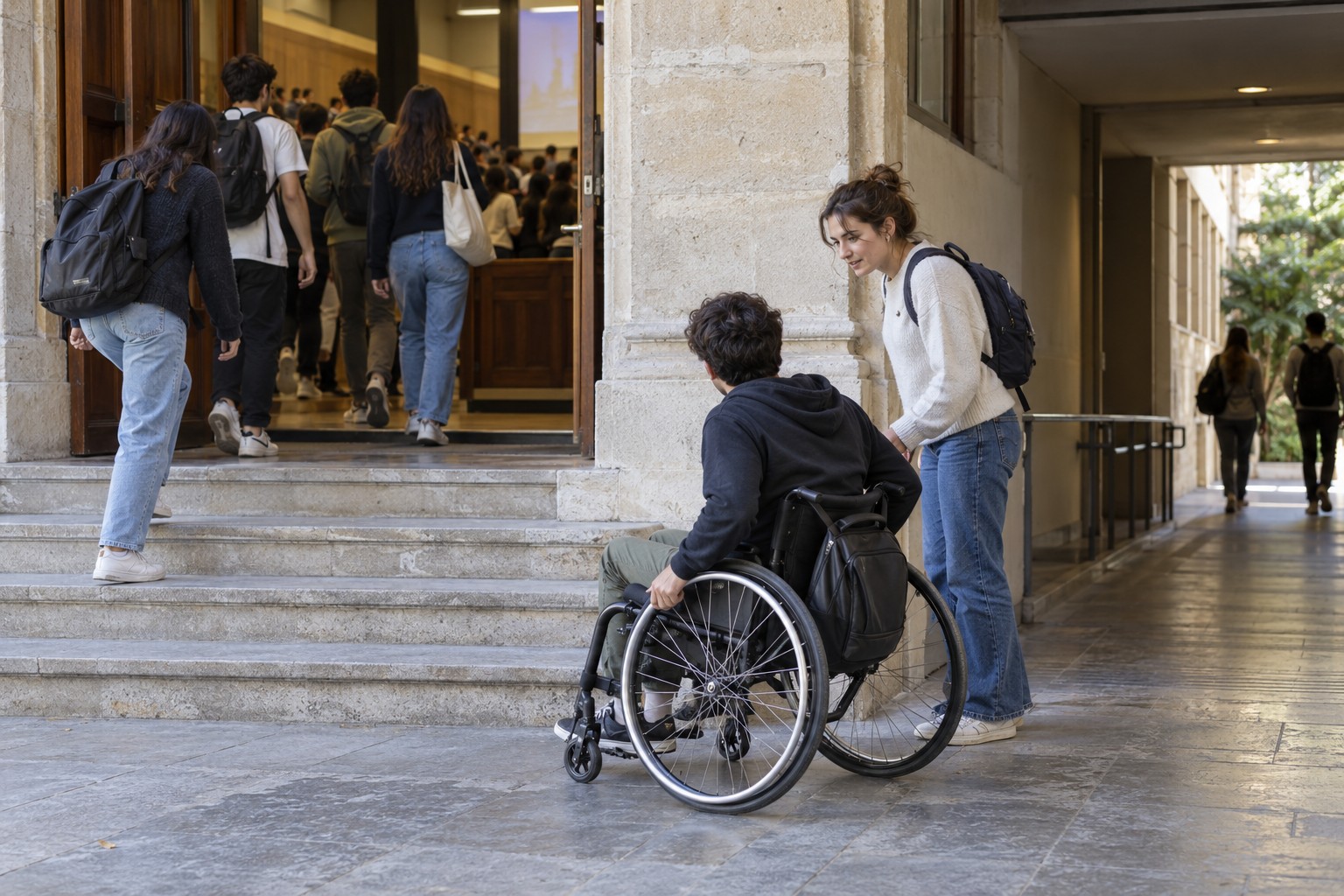
A staircase leads to the meeting room, and the alternative access route is not immediately obvious from the main entrance. The barrier lies in the design of the space and the information provided, not in the person who needs an alternative route. In Challenge A6, this scene helps to identify physical access issues that must be resolved before we can talk about inclusive participation. It also encourages us to examine users’ actual experiences, rather than assuming that the formal existence of an adaptation is sufficient. Question for discussion. Can any participant reach the room independently and with dignity?

.. continue >>
Source: Image generated using generative AI for the BRIDGE project.
Interpreting the images together

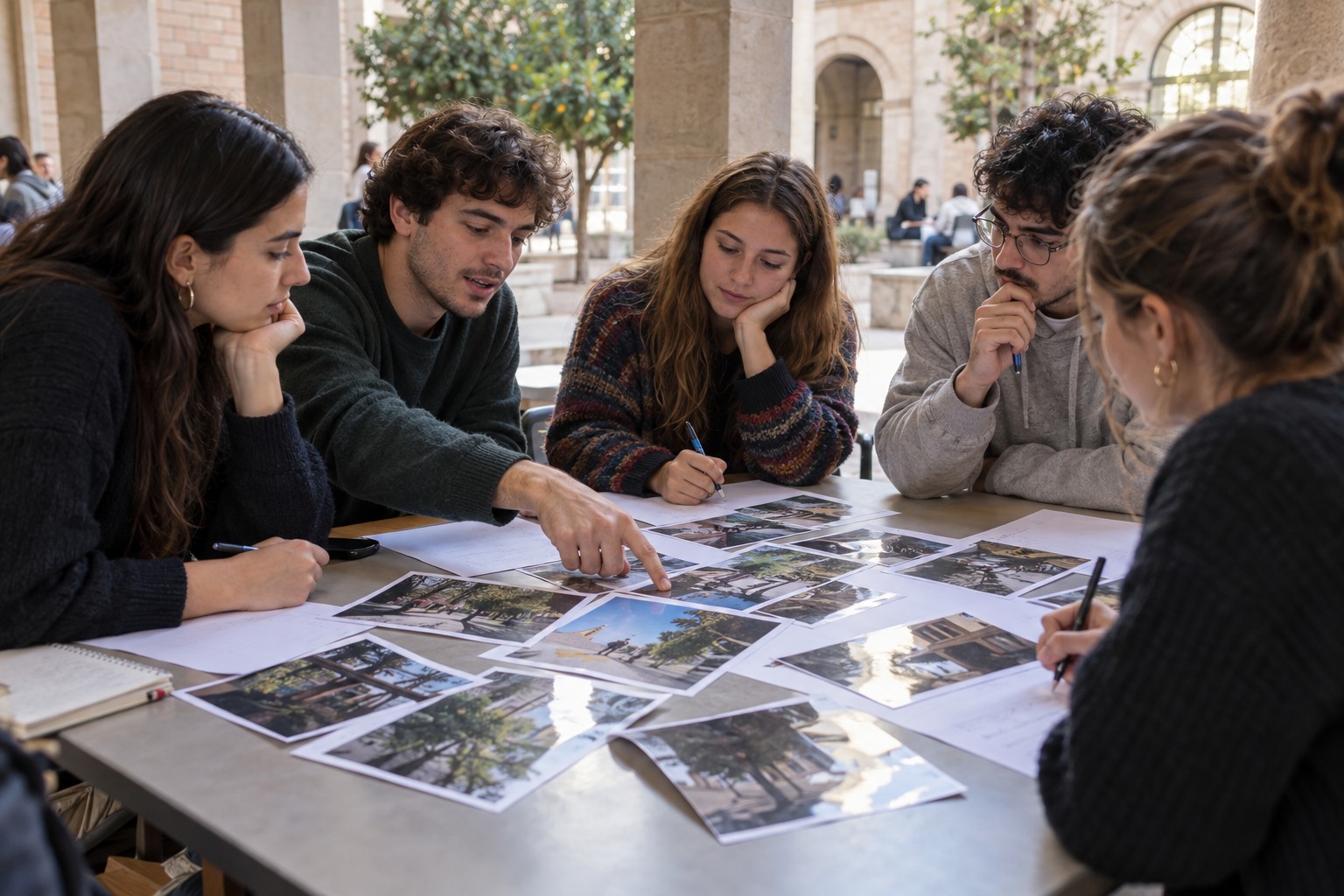
A group looks at photographs of their university environment and discusses what they show. This is a possible scenario for Activity 4: each image gives rise to interpretations, disagreements and questions that need to be discussed with those who know the space. Photographs are not automatic proof of a cause, nor do they replace the voices of those affected; they serve as a facilitator of dialogue. In Challenge A6, collective work transforms observation into a shared diagnosis that can guide proposals. Question for discussion. What do we see, what are we assuming, and whose voices should we listen to?

.. continue >>
Source: Image generated using generative AI for the BRIDGE project.
A proposal awaiting a response

A proposal is placed in a visible space, leaving open the question of who will receive it and what response will follow. The scene ties in with activities 5 and 6: recording the submission, disagreements, commitments, silences and feedback to the group. The mere fact of presenting an initiative does not prove that it has influenced a decision. In Challenge A6, traceability allows us to examine whether there is a channel for response and institutional accountability. Question for discussion. Who should respond, by when, and how will the group find out what has been decided?

.. continue >>
Source: Image generated using generative AI for the BRIDGE project.
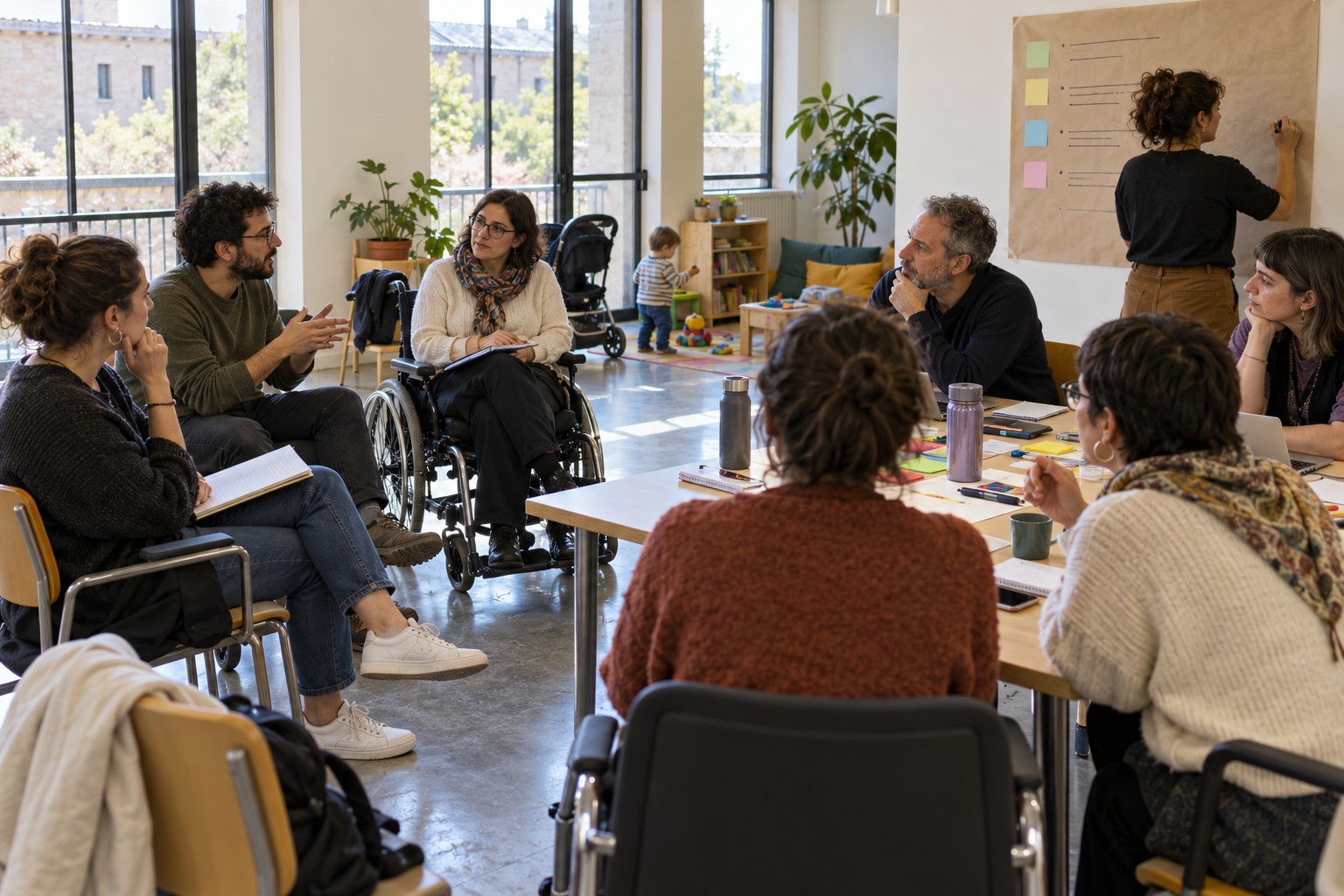
Designing participation to make it work

A meeting combines an accessible space, care arrangements, conversation and the recording of agreements. The scene suggests possible forms of support, but their effectiveness cannot be gauged simply by looking at the photograph: one would need to ask who decided on the topic, how decisions were made and how they will be followed up. As a conclusion to Challenge A6, it invites us to imagine concrete changes to the conditions of participation, representation and influence, and to assess them with those taking part. Question for discussion. What conditions would allow contributions to influence an actual decision?

.. continue >>
Source: Image generated using generative AI for the BRIDGE project.