The project Bridge is co-funded by the European Union. Views and opinions expressed are however those of the author(s) only and do not necessarily reflect those of the European Union or the Servicio Espanol para la Internacionalizacion de la Educacion (SEPIE). Neither the European Union nor the National Agency SEPIE can be held responsible for them. -- Number: 2025-1-ES01-KA220-HED-000359236 --
Press & Media

The BRIDGE project partnership made contacts with web sites focusing on the field of school education. The BRIDGE project was presented to the web masters and a link to The BRIDGE project portal was made so that those who will access the selected web sites can also access, through a direct link, the The BRIDGE project portal.

Press

Found 2 links

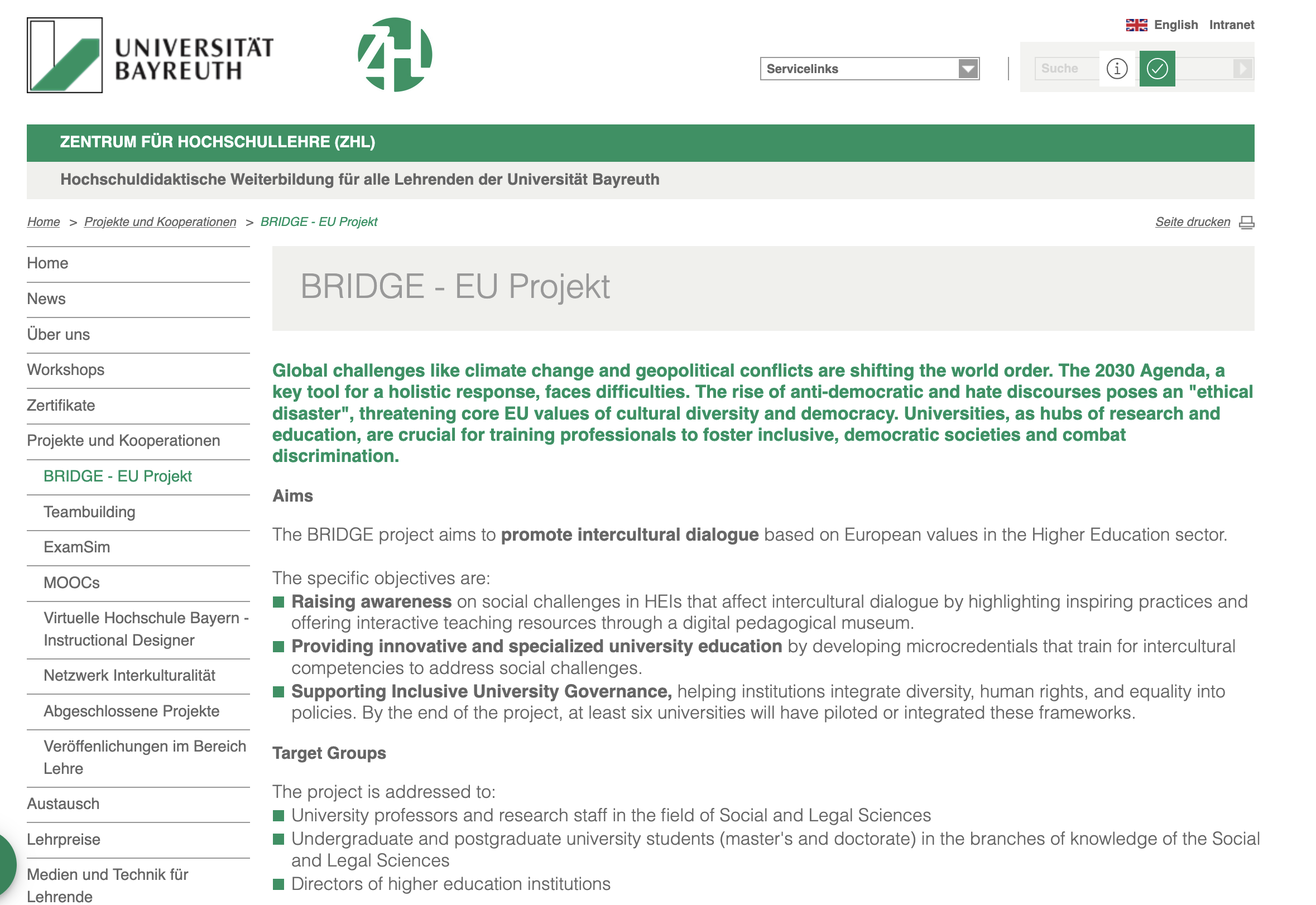
University of Bayreuth Builds Bridges for an Inclusive Europe

24/04/2026

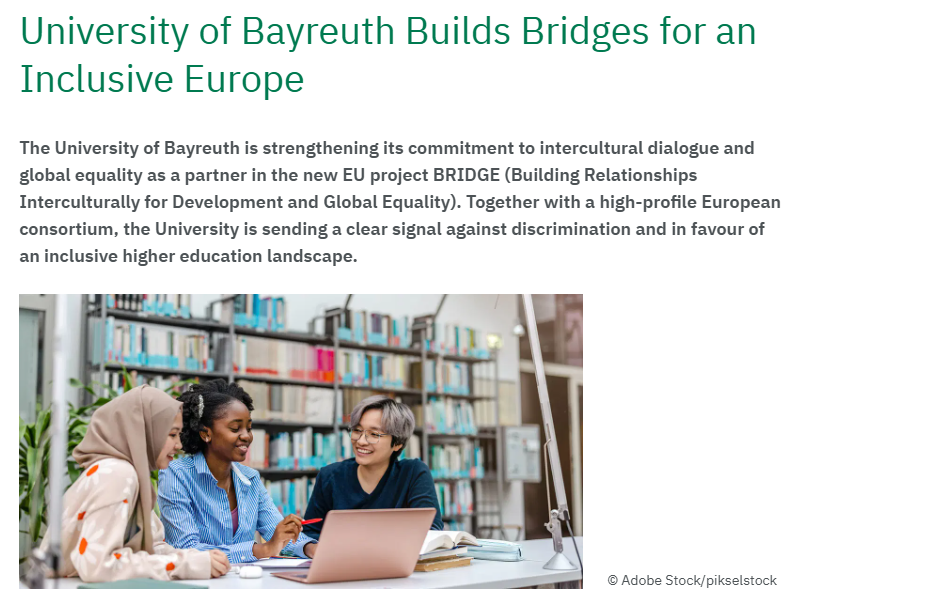
The University of Bayreuth is strengthening its commitment to intercultural dialogue and global equality as a partner in the new EU project BRIDGE (Building Relationships Interculturally for Development and Global Equality). Together with a high-profile European consortium, the University is sending a clear signal against discrimination and in favour of an inclusive higher education landscape.


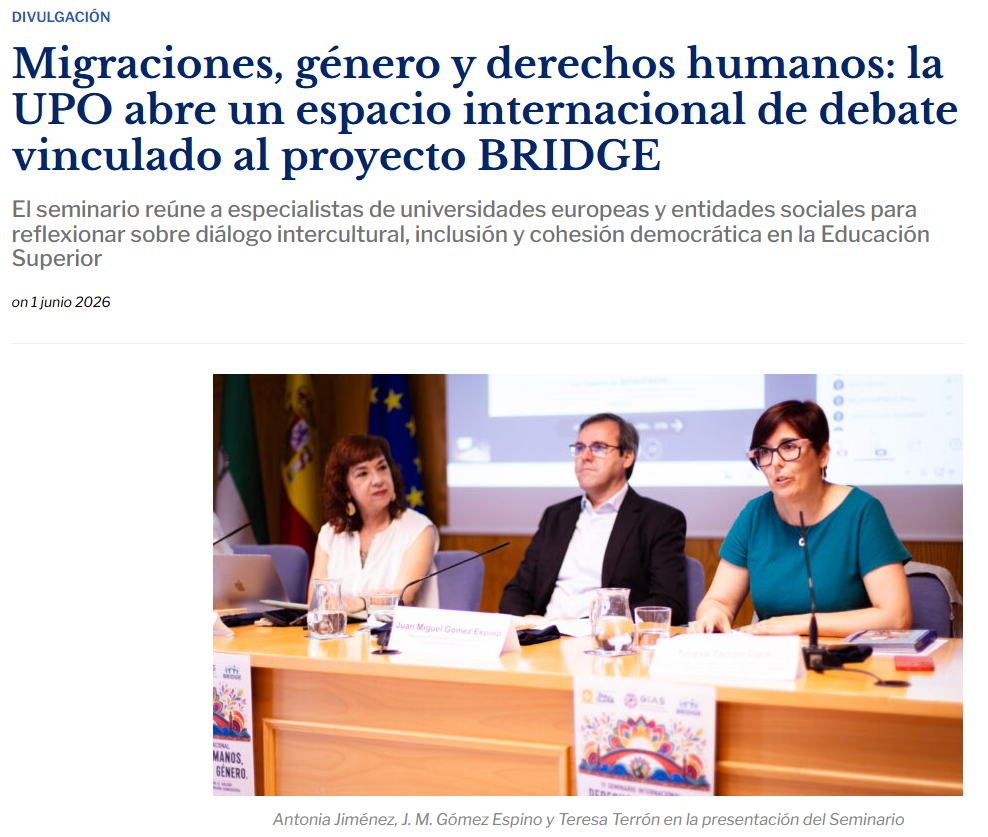
Migration, gender and human rights: UPO opens an international forum for debate linked to the BRIDGE project

01/06/2026

The Pablo de Olavide University hosted the 6th International Seminar on Human Rights, Migration, and Gender. This academic gathering offered a transnational perspective on the current challenges of migration, cultural diversity, and equality through intercultural dialogue, inclusion, and democratic cohesion. The event, held in a hybrid format on June 1st and 2nd, took place in person in the Lecture Hall of Building 7 on the UPO campus.


Found 30 links

Exchange Links

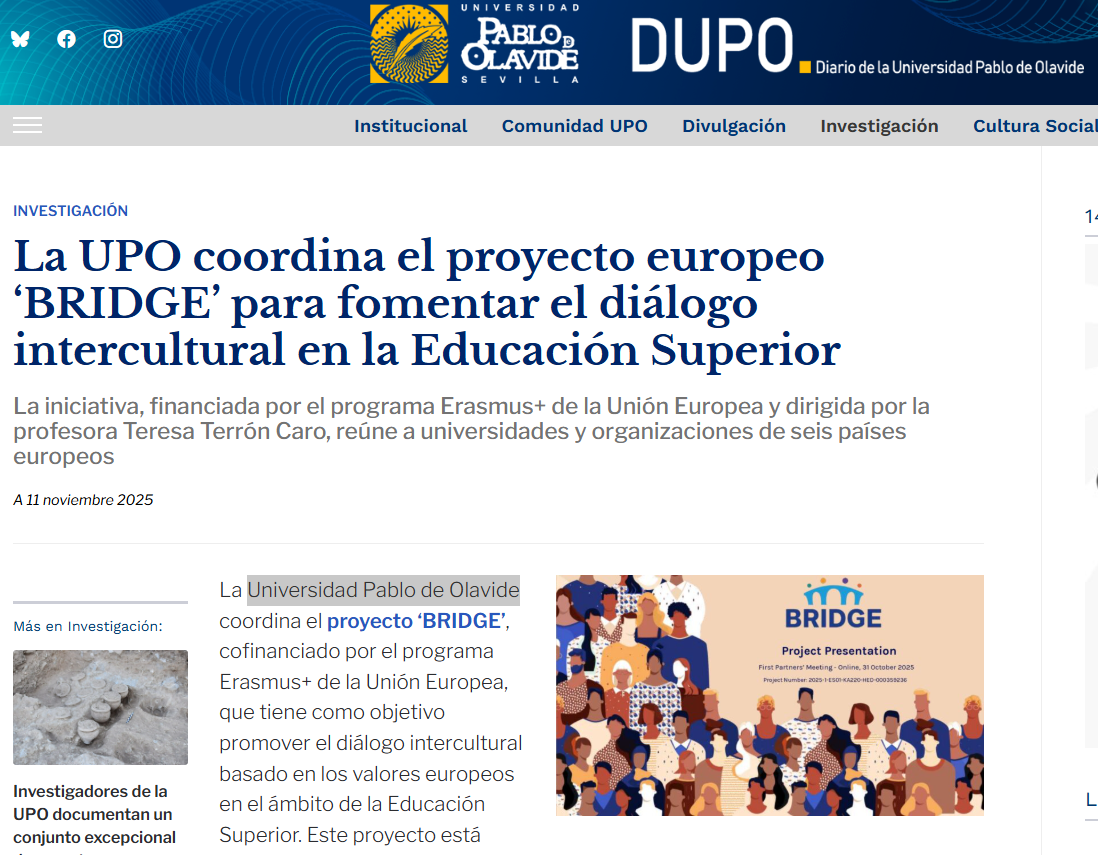
Universidad Pablo de Olavide

This news item published in the Pablo de Olavide University Journal reports on the awarding of the BRIDGE project, indicating its purpose, results, duration and the consortium involved. It also reports on the first online meeting held on 31 October 2025.


Pixel

Pixel is partner in the BRIDGE project. Pixel website provides information about the project together with a direct link to the Portal. Users from Universities, Associations, Public bodies, Training Agencies, Schools, participants in the International Conferences on Education and people interested in the seminars/masters visit Pixel website (estimated visits are around 12.000 users each year). They may now learn about and benefit from the Bridge project.


AVTIA

The AVTIA project aims to develop new innovative content that provides lecturers in Higher Education Institutions (HEIs) with knowledge and materials in the form of open online courseware (OPC) to teach and assess inclusion in audiovisual translation/subtitling for the deaf and hard of hearing, and audio description for the blind and partially sighted; build and consolidate the required knowledge and skills of university students (including freelance translators) specializing in audiovisual translation through autonomous learning, preparing them for current labor market needs; generate attitude change and raise awareness among HEIs and stakeholders regarding the disparity in the range of inclusion services provided in different EU member states and the obligation to ensure access to public information for people with disabilities within national legislation.The website of the project reports a link to the BRIDGE project from the Press and Media section.


CO-THINK

The CO-THINK project has the aim to develop a functional STEAM approach for pre-service teacher training with a gender perspective and to foster competence in teaching computational thinking and to supports the digital transition by integrating computational thinking into STEM teaching. The website of the project reports a link to the BRIDGE project from the Press and Media section.


DAI

The DAI project has the aim to improve Italian as a foreign language instruction through the integration of AI. Its core objectives are to provide students with a personalized, AI-based training package; equip teachers with the digital and AI skills needed for effective integration of these technologies; offer a comprehensive resource library for both teachers and learners, gather a learner corpus from the online course for research purposes.This initiative seeks to transform teaching practices by leveraging AI's potential for tailored education. The website of the project reports a link to the BRIDGE project from the Press and Media section.


BREATH

The BREATH project aims to develop rehabilitation programs and plans, improve undergraduate and post-graduate education, improve patient education, educate patient's families and patients organizations, and improve patients quality of life. The project also aims to improve the skills of the following stakeholders: university of physiotherapy/ physical activity /sports /nursing students that need to acquire the professional skills and competencies required of today’s patients with chronic respiratory disease; it also helps physiotherapy/ physical activity /sports /nursing professionals who wish to specialize in a particular area. The website of the project reports a link to the BRIDGE project from the Press and Media section


ISN - Innovative skills for nurses

The Innovative Skills for Nurses (ISN) project has the aim to develop innovative nursing student-centered curricula in order to better meet their learning needs and to reduce skills mismatches for the training of Specialist Nurse (SN) and the Advanced Practice Nurse (APN) in a wide-spectrum of specialties with crucial impact on healthcare systems which will be extremely relevant for the labor market and for the wider society. The specific aims of the project are to develop an innovative Curriculum to be implemented in all partner universities for the training of Specialist Nurses (SN) and Advanced Practice Nurses (APN), to provide trainers and lecturers of in-service and student nurses with innovative digital teaching skills and methods and to create an online Repository of digital and virtual reality based scenarios and diagnostic challenges to be used as teaching and learning sources to qualify nurses. The website of the project reports a link to the BRIDGE project from the Press and Media section.


VIW-Voices of Immigrant Women

The VIW project aims to answer to the need of students of developing better knowledge and awareness toward the theme of woman migrations considering the interrelation of factors such as: gender, status, ethnicity, age, religion, origin, political opinion. The website of the project reports a link to the BRIDGE project from the Press and Media section.


Connected for Health

The Connected For Health project has the aim to provide lecturers/ trainers in universities with skills, knowledge, methods and tools to explore and address teaching/training obesity and EDs trough a trans-disciplinary approach, help residents and students consolidate their knowledge and skills in approaching patiences with obesity and eating disorders, support specialists in different medical fields to acquire new trans-disciplinary knowledge and skills to deal with these patiences. The website of the project reports a link to the BRIDGE project from the Press and Media section.


COSY thinking

The Cosy-thinking project identifies three main specific objectives: to strengthen the collaboration among academic institutions provide them with a clearer picture of the range of opportunities between the universal and the particular; to provide academic lecturers and managerial staff with knowledge, skills and tools for adapting their educational activities with a specific focus on sustainable development and to provide undergraduate students with competences on complex systems thinking as a basis for sustainability action and make them employable in organizations interested to meet the sustainable development goals. The website of the project reports a link to the BRIDGE project from the Press and Media section.


IHES

The purposes of IHES project is to develop and implement online programme on inclusion and independent living for people with intellectual disabilities in universities; to design and pilot a methodology to support inclusion of students with intellectual disabilities in the Higher Education (HE) systems; and to develop a set of recommendations to university policy and decision makers at HE level on how to promote inclusion of people with intellectual disabilities. The website of the project reports a link to the BRIDGE project from the Press and Media section.


STEAM-ACTIVE

The purposes of STEAM-Active project are to improve the capacity of the higher education educational offer in engineering of new learning and teaching methods; to tackle engineering student underachievement and gender inequality; to provide university lecturers with STEAM based methodological approaches and teaching tools; and to provide universities with consistent, re-usable and up-scalable teaching-Learning sequences based on the STEAM methods. The website of the project reports a link to the BRIDGE project from the Press and Media section.


EME4EU

The EME4EU project has the aim to transform European Higher Education by empowering institutions to implement high-quality English Medium Education programs. It aims to enhance universities’ capacities, improve legislative frameworks, and foster collaboration among institutions, creating a globally competitive and inclusive education system. By addressing challenges like language barriers and resource gaps, the project promotes accessibility, innovation, and labor market alignment. The website of the project reports a link to the BRIDGE project from the Press and Media section.


Grupo de Ivestigación en Acción Socioeducativa (GIAS)

This news item, published on the website of the Socio-Educational Action Research Group (GIAS) on 1 November 2025, reports on the approval of the BRIDGE project, the consortium that comprises it, the duration of the project and its main results.


Facultad de Ciencias Sociales de la UPO - Boletín informativo de la comunidad educativa (BICEFACS)

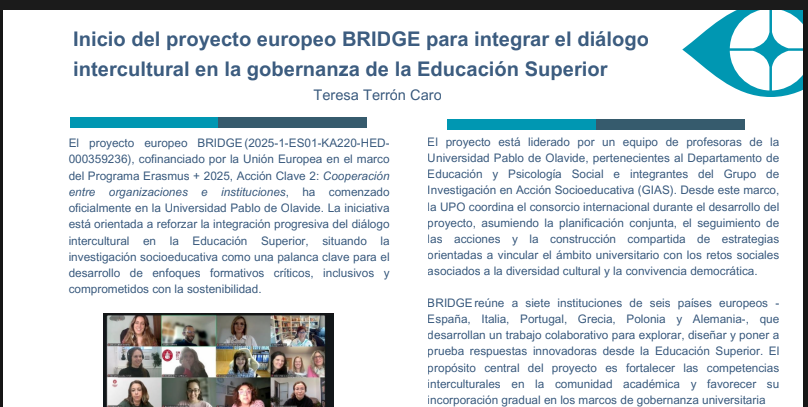
This news item was published in the Faculty of Social Sciences Newsletter (BICEFACS) (Newsletter 17, December 2025), ISSN 2695-6381, on 18 December 2025. This news item reports on the launch of the project and the first meeting.


AFJ

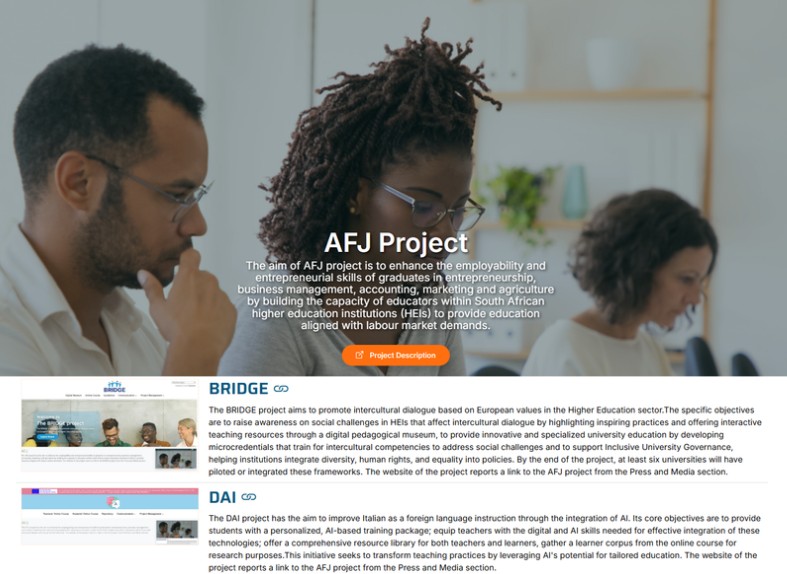
The AFJ project has the aim to enhance the employability and entrepreneurial skills of graduates in entrepreneurship, business management, accounting, marketing and agriculture by building the capacity of educators within South African higher education institutions (HEIs) to provide education aligned with labour market demands. The website of the project reports a link to the BRIDGE project from the Press and Media section.


Bridge project on EPLO website

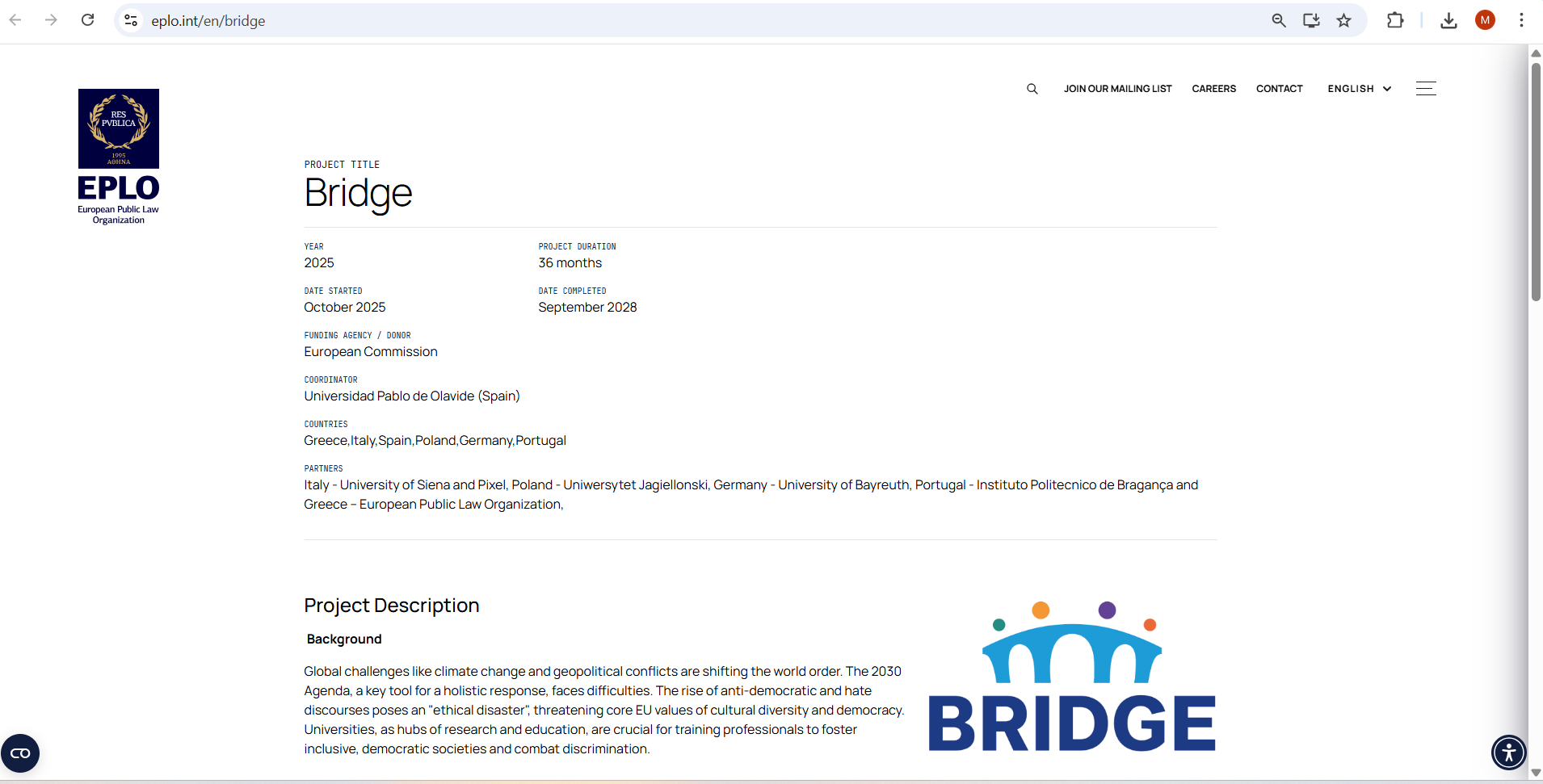
Project Title: BRIDGE Donor: ERASMUS+, European Commission Coordinator: Universidad Pablo de Olavide (Spain) Partners: University of Siena and Pixel (Italy), Uniwersytet Jagiellonski (Poland), University of Bayreuth (Germany), Instituto Politecnico de Bragança (Portugal), European Public Law Organization (Greece) Project starting date: 01/10/2025 Project duration: 3 years Countries: Spain, Italy, Greece, Germany, Poland, Portugal OVERALL OBJECTIVE The BRIDGE project aims to promote intercultural dialogue based on European values in the Higher Education sector. The specific objectives are: - Raising awareness on the main social challenges that currently exist in HEIs affecting intercultural dialogue, as well as to highlight inspiring practices and offer university communities interactive and innovative teaching resources through a digital pedagogical museum. - Providing innovative and specialised university education, through the development of microcredentials training sources for the acquisition of intercultural competences that respond to the social challenges. . - Supporting Inclusive University Governance, helping institutions integrate diversity management, human rights, and equality into policies and practices, contributing to socially responsible higher education systems. By the end of the project, at least six universities will have piloted or integrated these governance frameworks into their policies. ACTIVITIES - WP1 Project Management - WP2 Digital Museum for intercultural dialogue - WP3 Short-term online training package providing micro-credentials - WP4 Guidelines for the Promotion of Intercultural Dialogue - WP5 Dissemination and valorisation strategy implementation


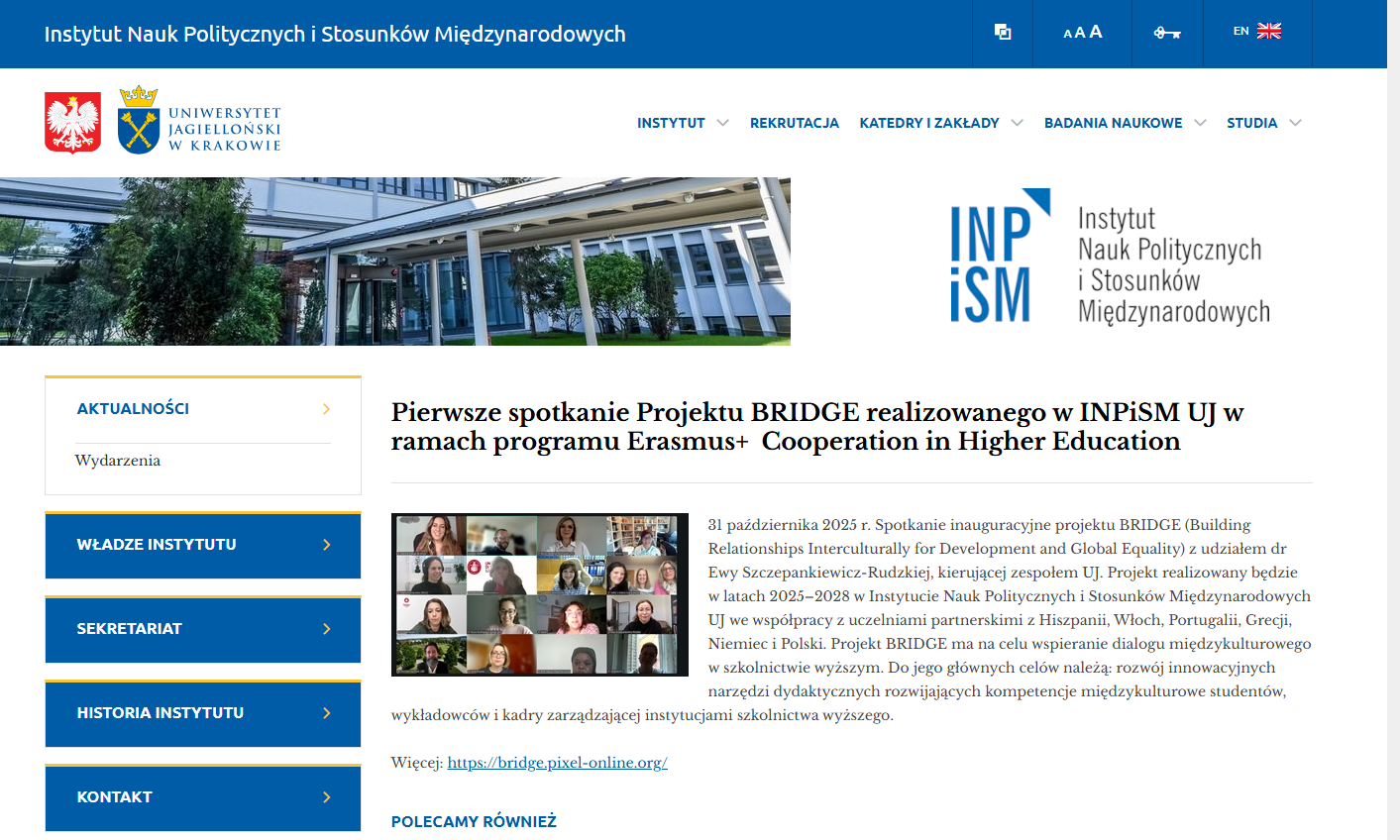
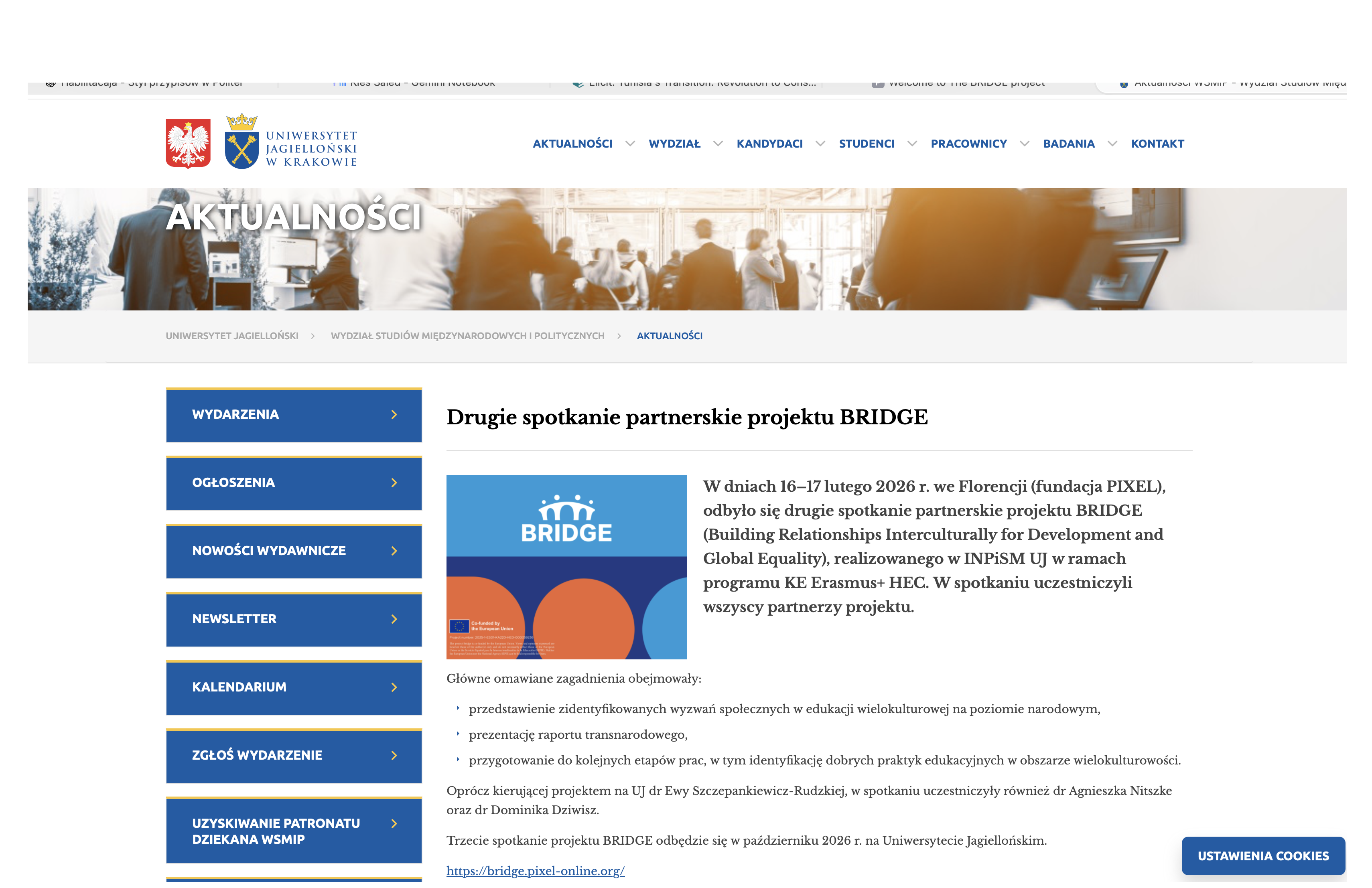
Jagiellonian University

This item published on the Institute's website reports on the awarding of the BRIDGE project, indicating its purpose, results, duration and the consortium involved. It also reports on the first online meeting held on 31 October 2025.


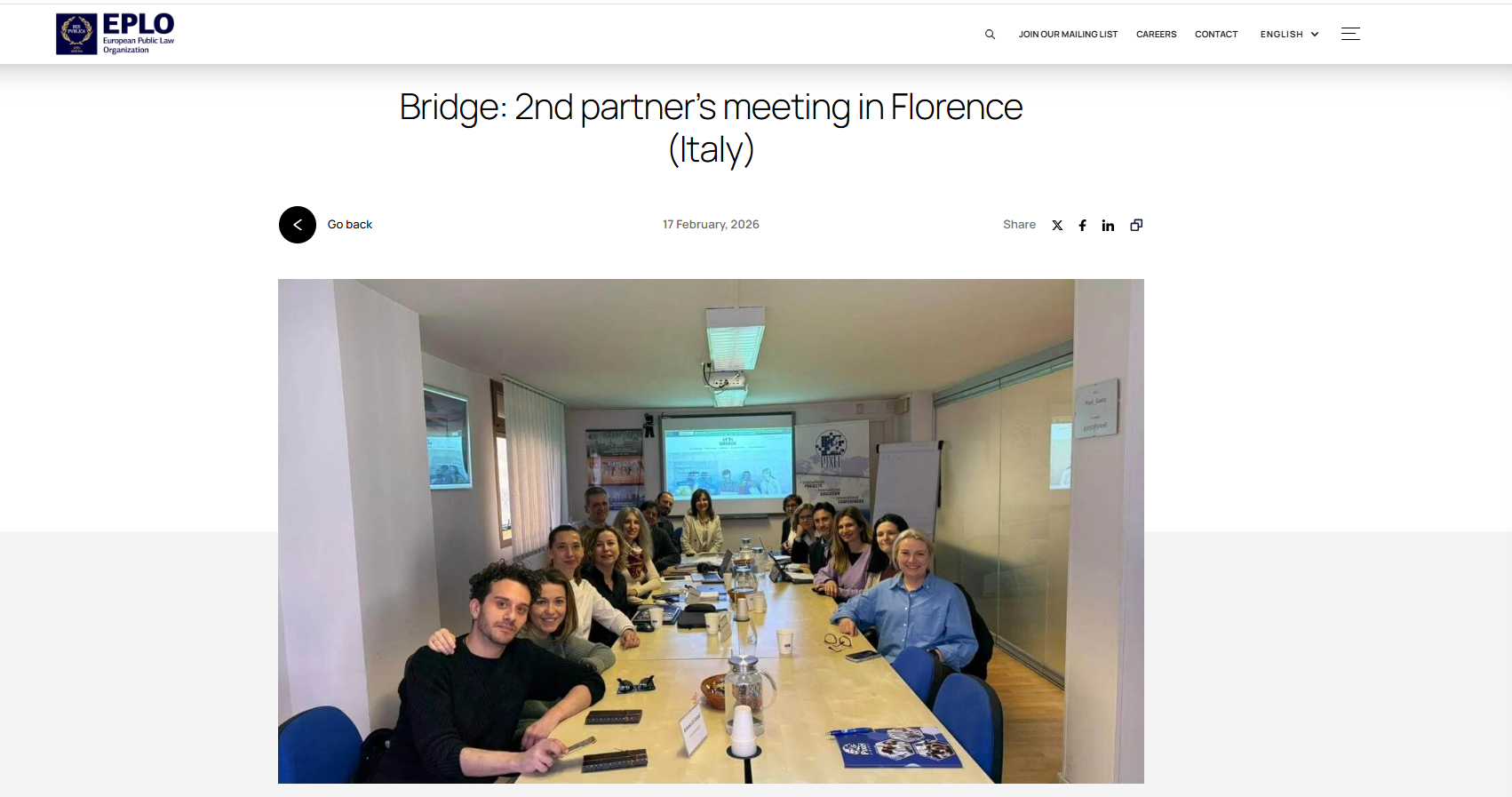
Bridge: 2nd partner’s meeting in Florence (Italy)

The European Public Law Organization (EPLO) participated as a proud partner in the second partners' meeting of the Bridge project that took place in Florence (IT) on 16 - 17 February 2026. All partners participated in the meeting and the main topics discussed were: - Analysis of the data collected at the national level - Presentation of the transnational report - Presentation of the identified social challenges - Definition of the next activities Next steps focus on the preparations of building Bridge’s digital museum through gamification, documentary photography and shared reflective analysis. The BRIDGE project, co-funded by the European Union (KA220), aims to promote intercultural dialogue based on European values in the Higher Education sector. Find out more about the BRIDGE Project and visit the official website: https://bridge.pixel-online.org/index.php


University of Bayreuth

This is the first website in our institution that shows, that we are connected to the project.


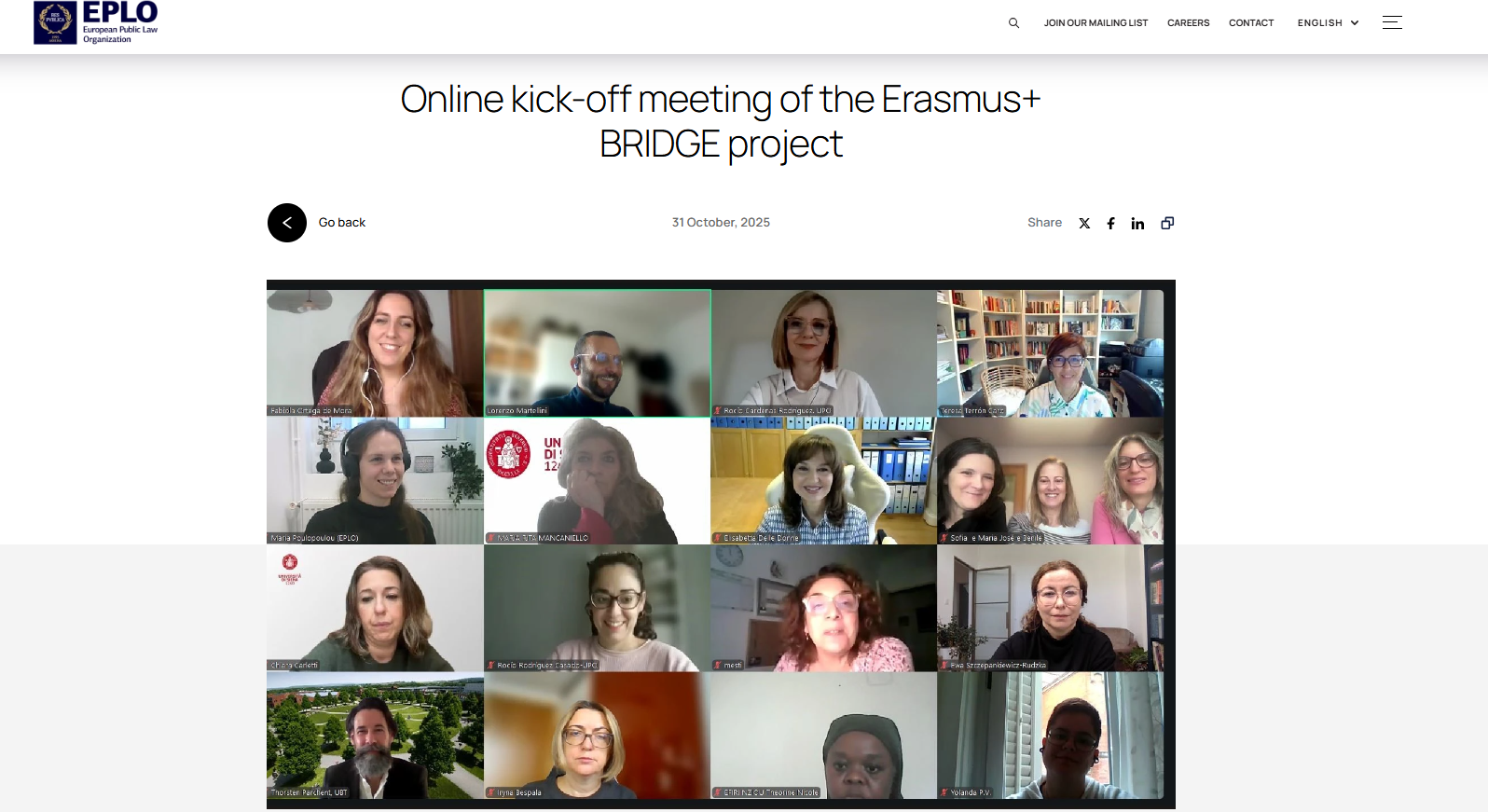
Online kick-off meeting of the Erasmus+ BRIDGE project on EPLO site

The European Public Law Organization (EPLO) as a partner in the EU funded ERASMUS+ BRIDGE project (2025-1-ES01-KA220-HED-000359236), successfully participated to the project’s online kick-off meeting. The meeting brought together partners and HEIs from Spain - Universidad Pablo de Olavide (project coordinator), Italy - University of Siena and Pixel, Poland - Uniwersytet Jagiellonski, Germany - University of Bayreuth, Portugal - Instituto Politecnico de Bragança and Greece – European Public Law Organization with an aim to set a solid basis for projects activities implementation and methodological approach, ensuring a shared understanding as we begin moving forward. During the meeting, participants aligned on: The project’s overall goals and expected outcomes Responsibilities and contributions of each team member Major milestones and the implementation schedule Communication and coordination processes With this foundation in place, the project now transitions into its implementation phase with a duration of 3 years. The aim of the project is to promote intercultural dialogue based on European values in the Higher Education sector through raising awareness on the main social challenges, providing innovative and specialized university education via micro-credential training sources and supporting inclusive University Governance.


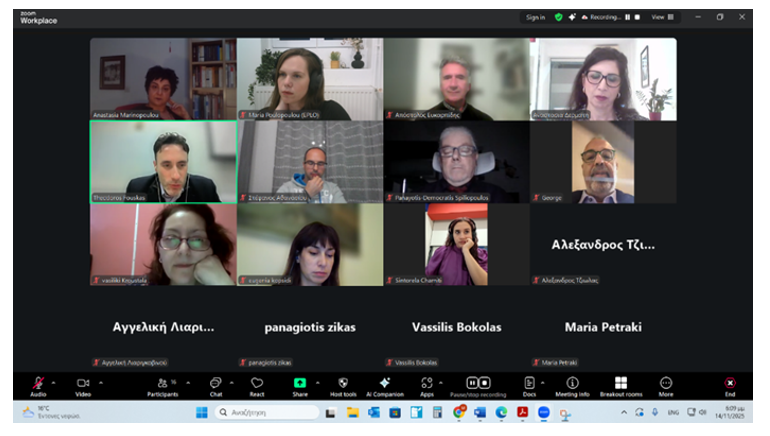
Bridge Online Meeting of the Working Group on Health Inequalities Among Vulnerable Populations in Greece on EPLO site

The European Public Law Organization (EPLO) as a partner in the EU funded BRIDGE project (2025-1-ES01-KA220-HED-000359236) succesfully organized an online meeting for the Greek working group titled “Social Determinants of Health and Well-being of Vulnerable Populations: Ethnic-Racial Disparities in Health Care” on 14 November 2025. Bringing together lectures, experts and HEIs students from social and legal sciences, participants tried to map country’s social determinants in regards to health risks faced by vulnerable groups. The event focused on how social, economic, political, environmental and health-related barriers contribute to deepening inequalities, with participants stressing that health outcomes are closely tied to poverty and marginalization. The Greek working group—comprised of five university lecturers and ten students—worked in three breakout groups to identify the most significant social determinants affecting health disparities in the country. Education and income emerged as the key drivers of inequality, influencing access to healthcare, living conditions and overall well-being. Participants also aligned their findings with the UN Sustainable Development Goals (SDGs), particularly the target of “reducing inequalities” under the 2030 Agenda. They emphasized that inequalities in Greece stem not only from financial hardship but also from social class, education level, age, gender, disability, and racial or cultural background. The workshop highlighted several core pillars shaping social and health disparities, including living environment, healthcare access, working conditions, income and educational opportunities. Participants noted that addressing these interconnected factors is essential for developing effective national strategies to support vulnerable populations and promote equitable health outcomes. The BRIDGE project with partners from Spain - Universidad Pablo de Olavide (project coordinator), Italy - University of Siena and Pixel, Poland - Uniwersytet Jagiellonski, Germany - University of Bayreuth, Portugal - Instituto Politecnico de Bragança and Greece – European Public Law Organization, aims to promote intercultural dialogue in higher education through a strong foundation of European values: raising awareness of the social challenges within HEIs; delivering innovative and specialized university trainings & supporting inclusive university governance.


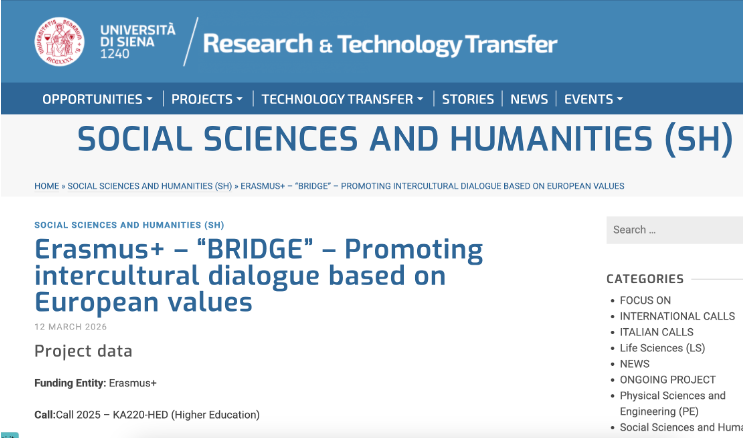
Erasmus+ BRIDGE – Promoting Intercultural Dialogue Based on European Values

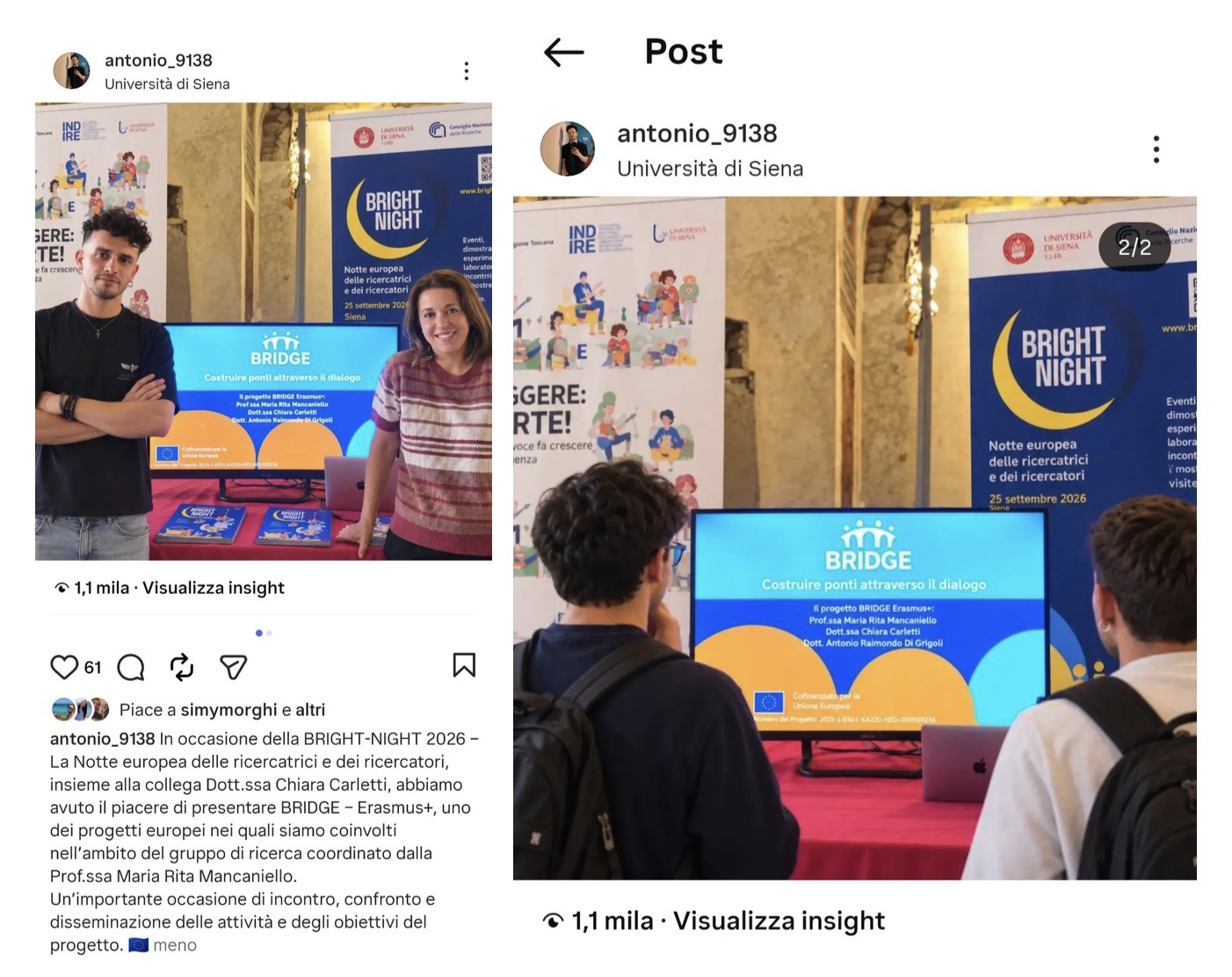
The University of Siena participates in the Erasmus+ project BRIDGE – Promoting Intercultural Dialogue Based on European Values, aimed at strengthening inclusive and democratic practices in higher education. The project promotes intercultural dialogue, equity and social inclusion through research, educational innovation and collaboration among European universities and partners. More information about the project and its objectives is available on the institutional webpage of the University of Siena.


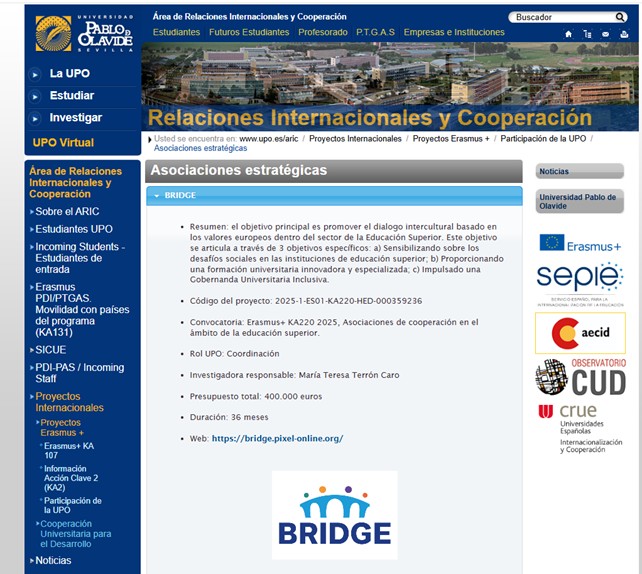
International Relations Area of UPO

The International Relations and Cooperation Office (ARIC) of the Pablo de Olavide University is established as the technical-administrative unit which, under the Vice-Rectorate for Internationalisation, is responsible for managing actions that, cutting across most areas of university activity, impact the institution’s internationalisation process and facilitate its international promotion and development, thereby enhancing its presence within the international higher education landscape. The estimated annual number of visits to the ARIC website is based on the size of the university community at the Universidad Pablo de Olavide and typical consultation patterns related to mobility programmes. Considering repeated access across different stages of the process, an approximate range of 15,000 to 25,000 visits per year is estimated.


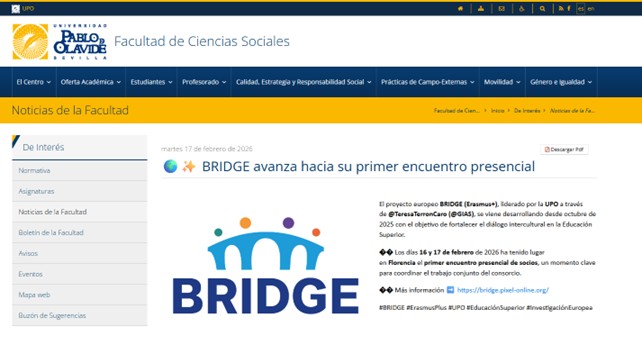
BRIDGE avanza hacia su primer encuentro presencial

The Faculty of Social Sciences at the Universidad Pablo de Olavide is a public institution actively engaged with the society of which it is part through the undergraduate and double degree programmes it offers. The Faculty’s academic, research and administrative staff work to provide students with high-quality teaching and research, contributing to a benchmark higher education at regional, national and international levels, closely linked to the social domain. The Faculty’s commitment to transparency, continuous improvement and innovation is reflected in its quality policy and objectives. The estimated annual number of visits to the Faculty of Social Sciences website ranges between 25,000 and 45,000, based on the size of its academic community and typical consultation patterns for academic and institutional information.


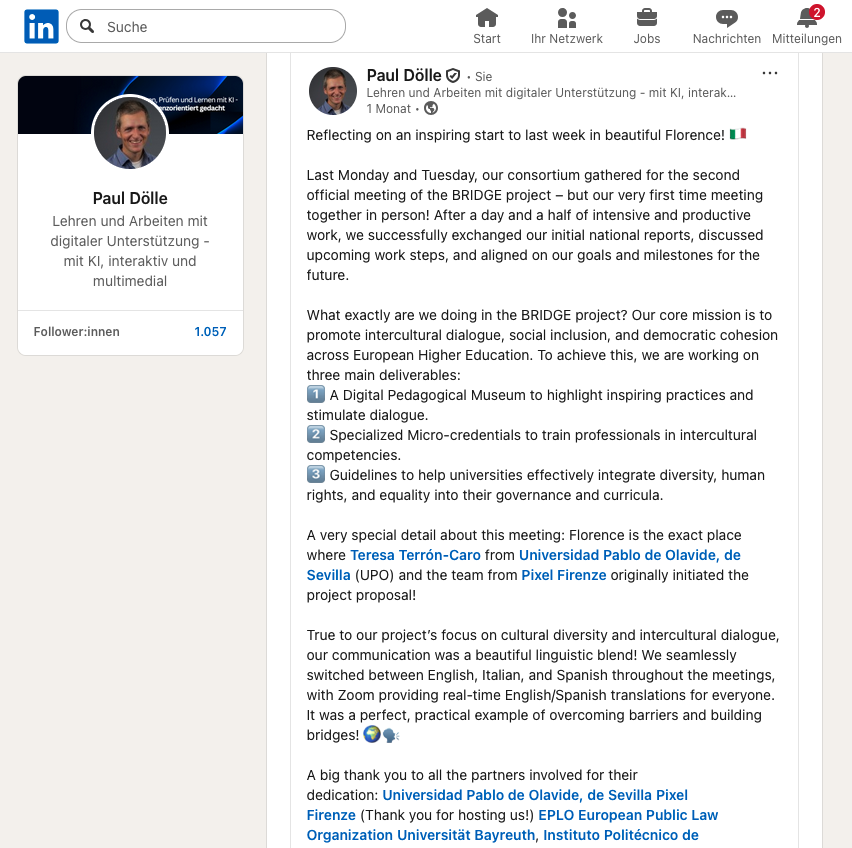
Posting on Linkedin about second meeting in Florence

Posting on Linkedin, 25. February 2026. Title: Reflecting on an inspiring start to last week in beautiful Florence! Last Monday and Tuesday, our consortium gathered for the second official meeting of the BRIDGE project – but our very first time meeting together in person! After a day and a half of intensive and productive work, we successfully exchanged our initial national reports, discussed upcoming work steps, and aligned on our goals and milestones for the future. What exactly are we doing in the BRIDGE project? Our core mission is to promote intercultural dialogue, social inclusion, and democratic cohesion across European Higher Education. To achieve this, we are working on three main deliverables: 1️⃣ A Digital Pedagogical Museum to highlight inspiring practices and stimulate dialogue. 2️⃣ Specialized Micro-credentials to train professionals in intercultural competencies. 3️⃣ Guidelines to help universities effectively integrate diversity, human rights, and equality into their governance and curricula. A very special detail about this meeting: Florence is the exact place where Teresa Terrón-Caro from Universidad Pablo de Olavide, de Sevilla (UPO) and the team from Pixel Firenze originally initiated the project proposal! True to our project’s focus on cultural diversity and intercultural dialogue, our communication was a beautiful linguistic blend! We seamlessly switched between English, Italian, and Spanish throughout the meetings, with Zoom providing real-time English/Spanish translations for everyone. It was a perfect, practical example of overcoming barriers and building bridges! A big thank you to all the partners involved for their dedication: Universidad Pablo de Olavide, de Sevilla Pixel Firenze (Thank you for hosting us!) EPLO European Public Law Organization Universität Bayreuth, Instituto Politécnico de Bragança, Università di Siena, Jagiellonian University Check out the photos from our meeting below, along with an infographic that outlines our main project goals! #BRIDGEProject #HigherEducation #ErasmusPlus #InterculturalDialogue


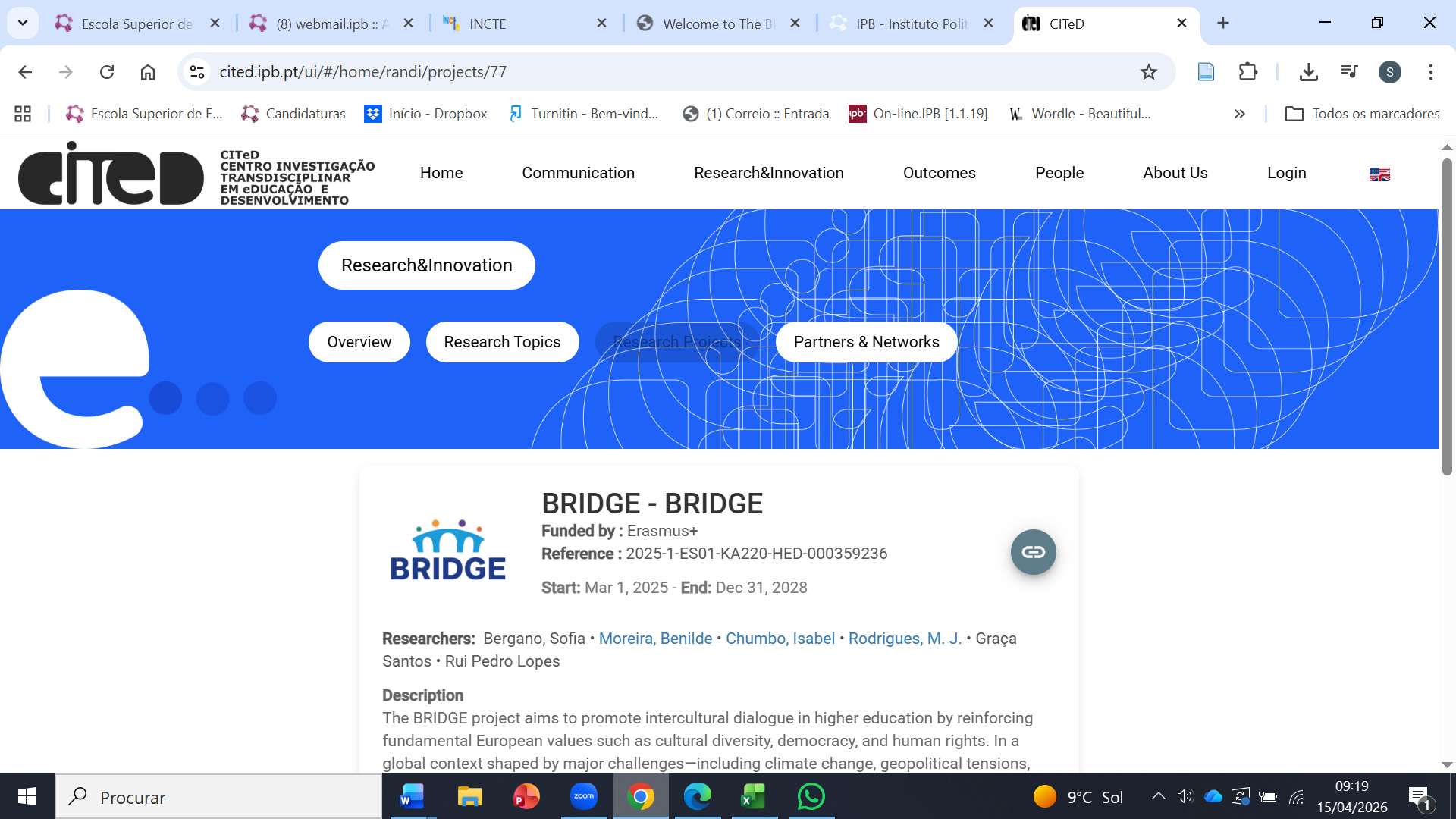
CITed

The CITeD (The Transdisciplinary Research Center in Education and Development) website provides information about the Bridge project together with a direct link to the Portal. The CITeD website discloses scientific events and research projects organised by the research centre or in which it is involved, as well as the research output of its members, and training opportunities available to the academic and professional community in the field of education and development. The website’s visitors are mainly researchers, higher education students and education professionals (early years educators, teachers, social educators, environmental educators, socio-cultural facilitators, amongst others). . During the academic year 2024/2025, the website attracted approximately 10,000 users. They may now learn about and benefit from the BRIDGE project, expanding its visibility and outreach across diverse educational and research communities.


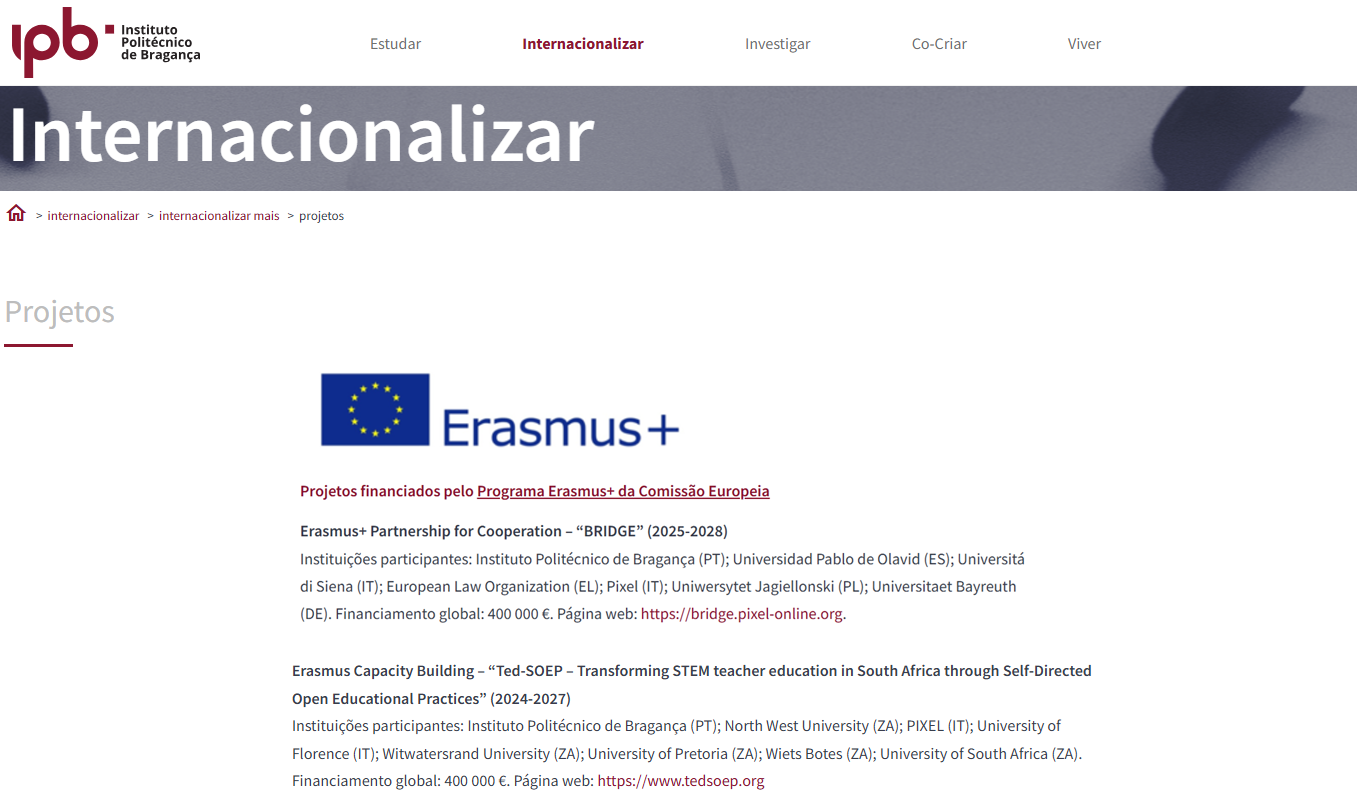
Instituto Politécnico de Bragança

IPB is partner in the Bridge project. IPB website provides information about the project together with a direct link to the Portal. Users from Universities, Associations, Public bodies, Training Agencies, Schools, participants in the International Conferences on Education and people interested in the seminars/masters visit IPB website. They may now learn about and benefit from the Bridge project.


2nd Working Group of the Bridge Project conducted in Greece

On 22nd of June, the 2nd Working Group of the co-funded Erasmus+ BRIDGE project (2025-1-ES01-KA220-HED-000359236) was held, bringing together 14 researchers, PhD candidates, university lecturers and academic coordinators at the European Public Law Organization (EPLO)’s headquarters, to learn more about the best practices promoting intercultural skills in higher education identified in Greece. EPLO is one of the project partners, alongside other institutions from Spain, Italy, Germany, Poland and Portugal. The participants discussed and exchanged their views on the significance of the selected initiatives in addressing modern challenges associated with an international environment where mobility, either by choice or force majeure, and integration in host societies, social cohesion and respect of human rights pose significant challenges across many sectors, including higher education. The BRIDGE project has now reached a critical milestone as the partners have identified various best practices across the participating countries. The next step is to develop a Digital Museum for Intercultural Dialogue to share the curated material with students and university professors across the EU, enhancing intercultural competences and elevating the quality of higher education. The BRIDGE project is implemented by a consortium from Spain - Universidad Pablo de Olavide (project coordinator), Italy - University of Siena and Pixel, Poland - Uniwersytet Jagiellonski, Germany - University of Bayreuth, Portugal - Instituto Politecnico de Bragança and Greece – European Public Law Organization, which aims to promote intercultural dialogue in higher education through a strong foundation of European values: raising awareness of the social challenges within HEIs; delivering innovative and specialized university trainings & supporting inclusive university governance.


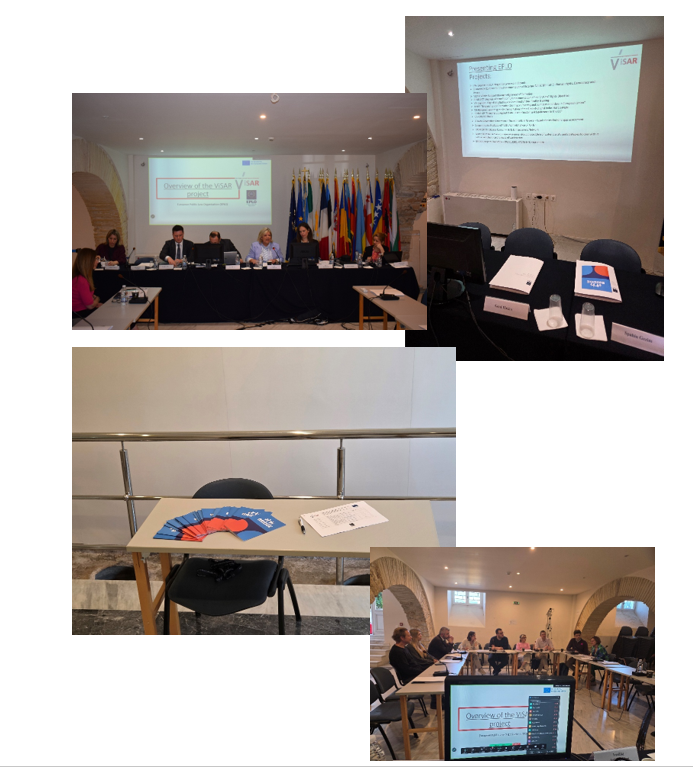
BRIDGE project presentation on the VISAR project

Within the framework of the ViSAR Project Mutual Exchange and Learning Event: “Victims’ Rights in the criminal justice system: Recent developments in Greece and Albania” held on 27 April 2026, the Erasmus+ project BRIDGE was presented by the European Public Law Organization as an initiative promoting intercultural dialogue and inclusive governance in higher education across Europe. Funded by Erasmus+ and coordinated by Universidad Pablo de Olavide, the three-year project brings together partners from Spain, Italy, Greece, Germany, Poland and Portugal. BRIDGE aims to strengthen intercultural competences through innovative educational tools, a digital pedagogical museum, micro-credentials training courses, and guidelines supporting diversity, equality, and human rights within universities. The presentation highlighted to the 51 participants (online and onsite) project’s effort upon fostering socially responsible and inclusive higher education systems, aligned with broader European values and cooperation initiatives.