The project Bridge is co-funded by the European Union. Views and opinions expressed are however those of the author(s) only and do not necessarily reflect those of the European Union or the Servicio Espanol para la Internacionalizacion de la Educacion (SEPIE). Neither the European Union nor the National Agency SEPIE can be held responsible for them. -- Number: 2025-1-ES01-KA220-HED-000359236 --
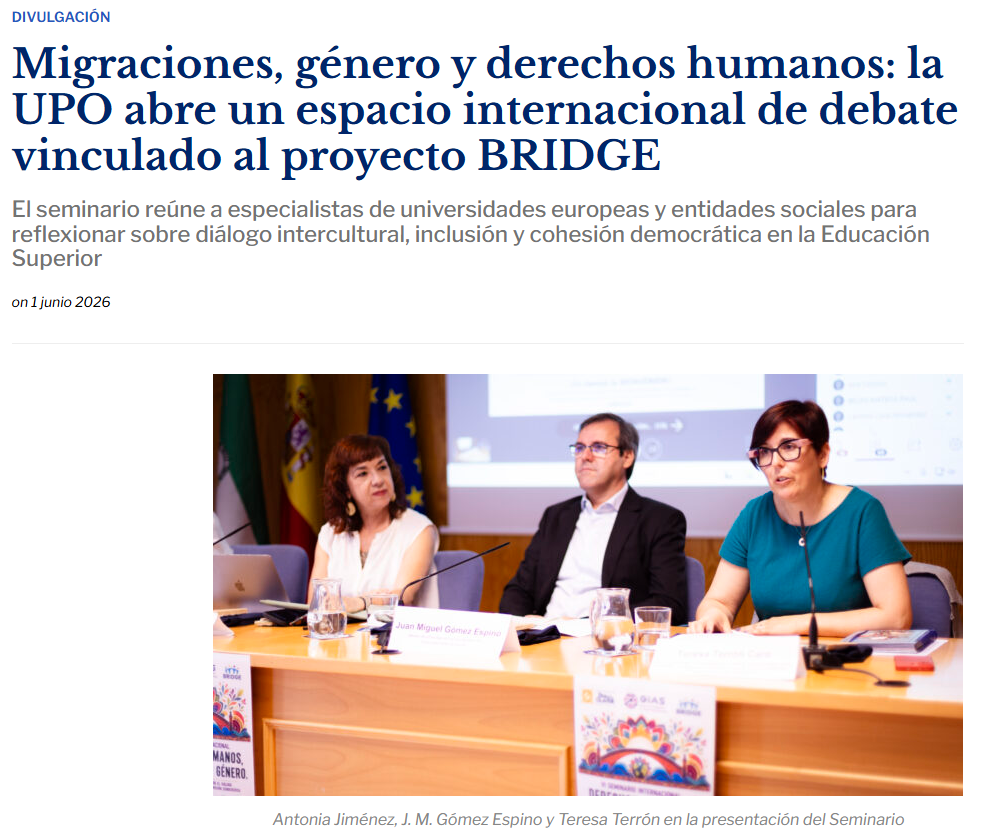
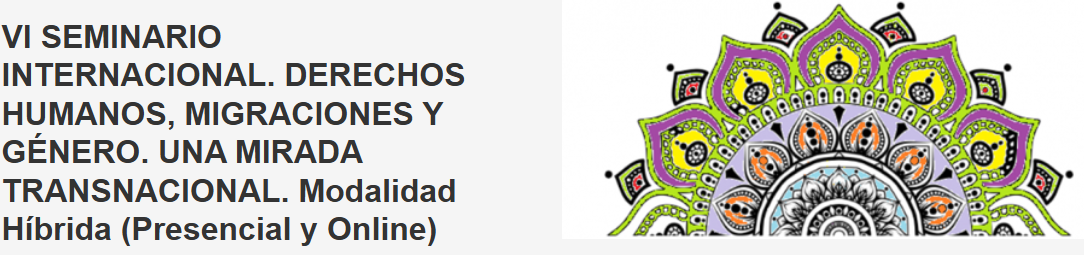
The Pablo de Olavide University hosted the 6th International Seminar on Human Rights, Migration, and Gender. This academic gathering offered a transnational perspective on the current challenges of migration, cultural diversity, and equality through intercultural dialogue, inclusion, and democratic cohesion. The event, held in a hybrid format on June 1st and 2nd, took place in person in the Lecture Hall of Building 7 on the UPO campus.
UPO organises the VI International Seminar “Human Rights, Migration and Gender. A Transnational Perspective” on 1 and 2 June 2026 in hybrid format. The roundtable “Intercultural Dialogue, Inclusion and Human Rights in European Higher Education: Perspectives on Migration, Gender and Diversity” is organized within this framework. The aim of this session is to open a shared space for reflection and dialogue around some of the main social challenges addressed in the project’s transnational report, connecting them with the main themes of the seminar and with the different realities analysed by the partner institutions.
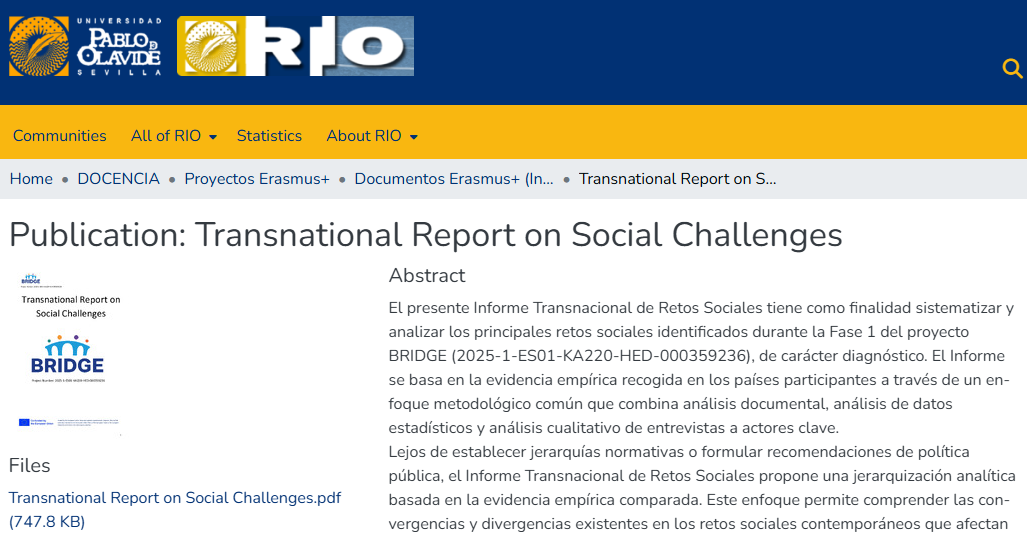
The consortium of the BRIDGE project (2025-1-ES01-KA220-HED-000359236) has published the Transnational Report on Social Challenges (2026), the consolidated outcome of Phase 1 (diagnostic stage) of the project.
This report provides the shared empirical and analytical foundation for the subsequent phases, which will focus on the development of educational resources, micro-credentials, and policy guidelines for European higher education.
The document presents a comparative and transnational analysis of the main social challenges affecting intercultural dialogue, inclusion, and democratic cohesion in Europe, based on documentary, statistical, and qualitative evidence.
The publication is available in open access (in English and Spanish) and has been assigned the following DOI: https://dx.doi.org/10.46661/rio.20260302_1
It can also be accessed and downloaded from the Institutional Repository of Pablo de Olavide University: https://hdl.handle.net/10433/26357
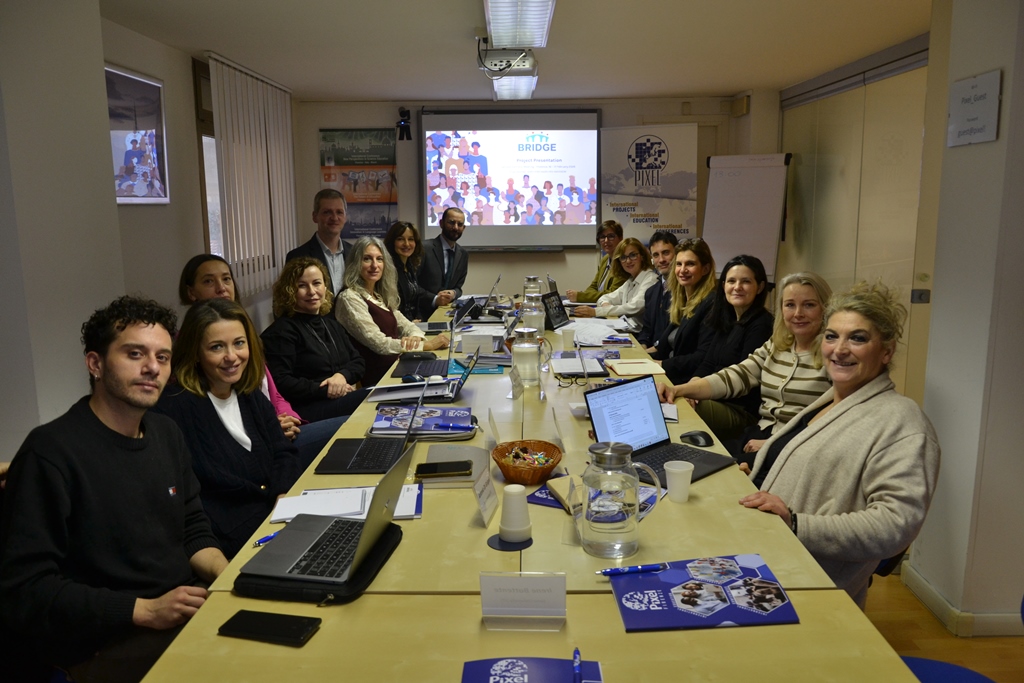
The second partners' meeting of the Bridge project took place in Florence (IT) on 16 - 17 February 2026. All partners participated in the meeting, and the main discussed topics were:
Each university, to recognise the main social challenges affecting intercultural dialogue in higher education, carried out a comparative documentary analysis of European policies and academic literature and Exploratory interviews with 5 - 8 key actors per country (NGOs, authorities, managers).
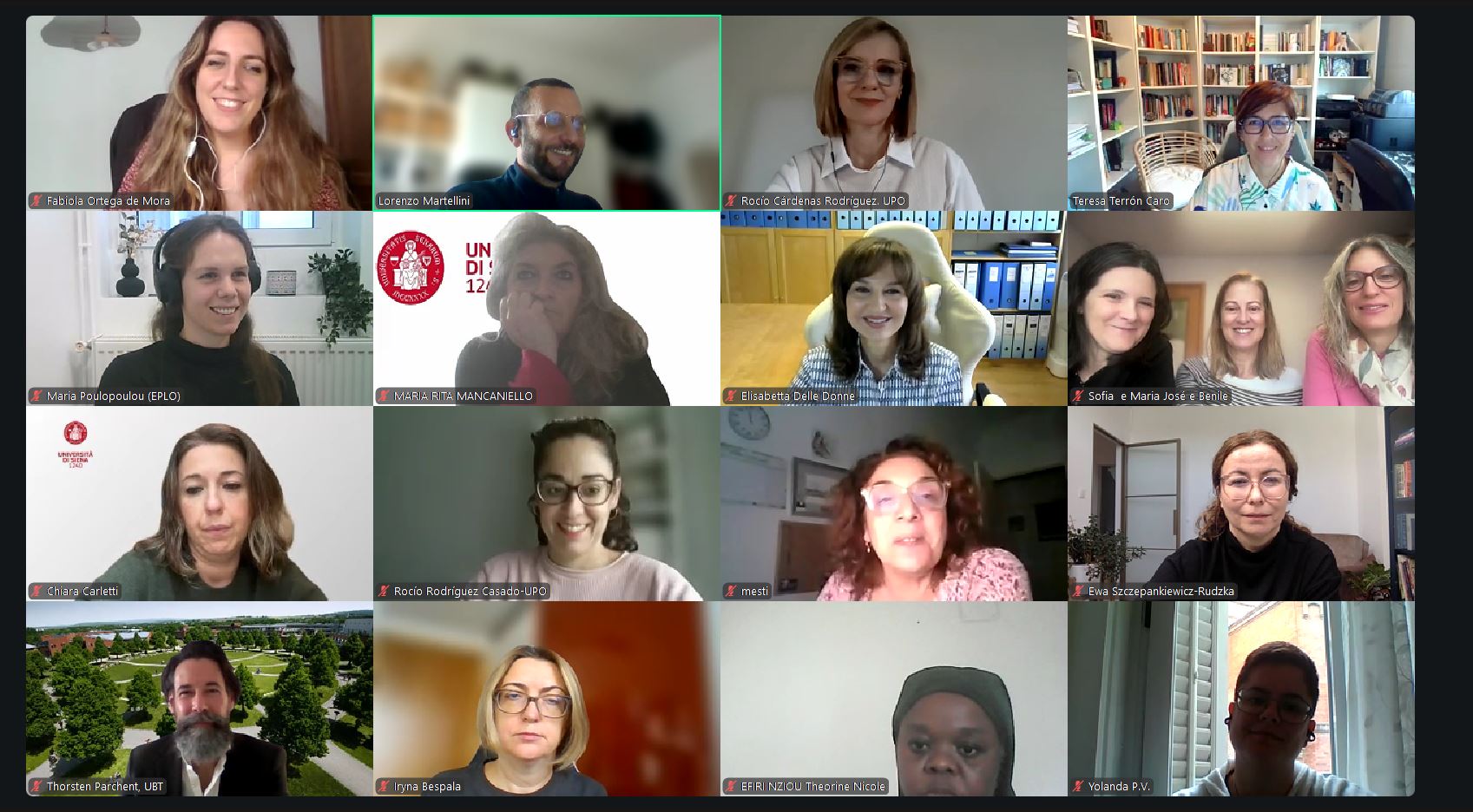
The BRIDGE first partners' meeting took place online on 31 October 2025. Teresa Terron from the UPO (ES) welcomed all the project partners to the Zoom platform where the meeting occurred. The European project partners introduced themselves and their project’s related experiences and expertise. The main discussed topics were: presentation of the project's general objectives and results; definition of the first activities devoted to the identification of the 6 social challenges that will be analysed in the digital museum; presentation of the quality plan, memorandum of understanding and dissemination plan.
The Bridge project is funded, by the European Commission through the Spanish National Agency for the Erasmus+ Programme with the aim to: