The project Bridge is co-funded by the European Union. Views and opinions expressed are however those of the author(s) only and do not necessarily reflect those of the European Union or the Servicio Espanol para la Internacionalizacion de la Educacion (SEPIE). Neither the European Union nor the National Agency SEPIE can be held responsible for them. -- Number: 2025-1-ES01-KA220-HED-000359236 --
The BRIDGE Digital Museum brings together good practices, educational proposals and images that inspire reflection and action
This is a collection of photographs or images related to the selected social challenge. Each image is accompanied by a brief description or narrative explaining its meaning and connection with the challenge.
A.5. Discrimination, racism and sociocultural polarisation, including hate speech Show all
This photograph illustrates how disagreement can be explored through a structured discussion that recognises different experiences and perspectives. Participants exchange views while a facilitator records areas of agreement, disagreement and unresolved questions. This approach makes differences visible without requiring immediate consensus and creates opportunities to clarify positions, question assumptions and identify shared concerns. The scene is not intended to suggest that dialogue alone can resolve discrimination or that every viewpoint should remain unchallenged. Rather, it invites reflection on the conditions needed for a discussion in which participants can disagree while respecting one another’s dignity and equal right to participate. These conditions include recognising power imbalances, addressing stereotypes and responding when contributions demean or exclude others. For BRIDGE Social Challenge 5, the image helps us understand that preventing socio-cultural polarisation does not require eliminating disagreement. It requires spaces where differences can be examined critically, discriminatory claims can be challenged and participants are not reduced to labels or treated as representatives of a supposedly homogeneous group.
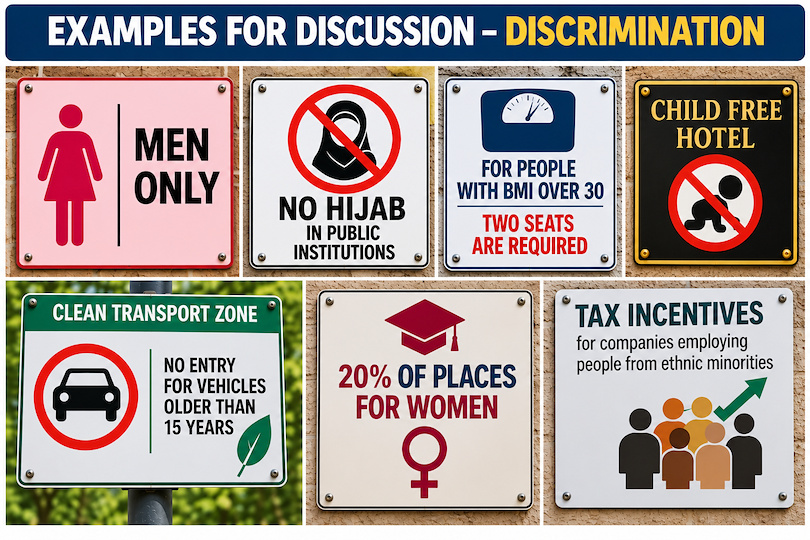
.. continue >>This graphic presents hypothetical restrictions and support measures concerning gender, religious expression, body size, children, vehicle age and the employment of people from ethnic minorities. By bringing these examples together, it invites reflection on how rules can create different conditions of access, participation and opportunity. The examples should not be understood as equivalent forms of discrimination: their purposes, contexts and practical consequences require separate examination. Some measures may exclude or stigmatise particular groups, while others may aim to reduce existing disadvantages or address a specific organisational or environmental concern. The graphic encourages users to ask who benefits, who faces additional barriers, what assumptions underpin each rule and whether less exclusionary alternatives are available. For BRIDGE Social Challenge 5: Discrimination, racism and socio-cultural polarisation, including hate speech, the image helps us understand that evaluating unequal treatment requires more than identifying a difference between groups. It requires critical attention to justification, implementation and effects. Such examination can also help prevent debates about fairness from becoming polarised around simplified claims that overlook people’s circumstances and experiences.
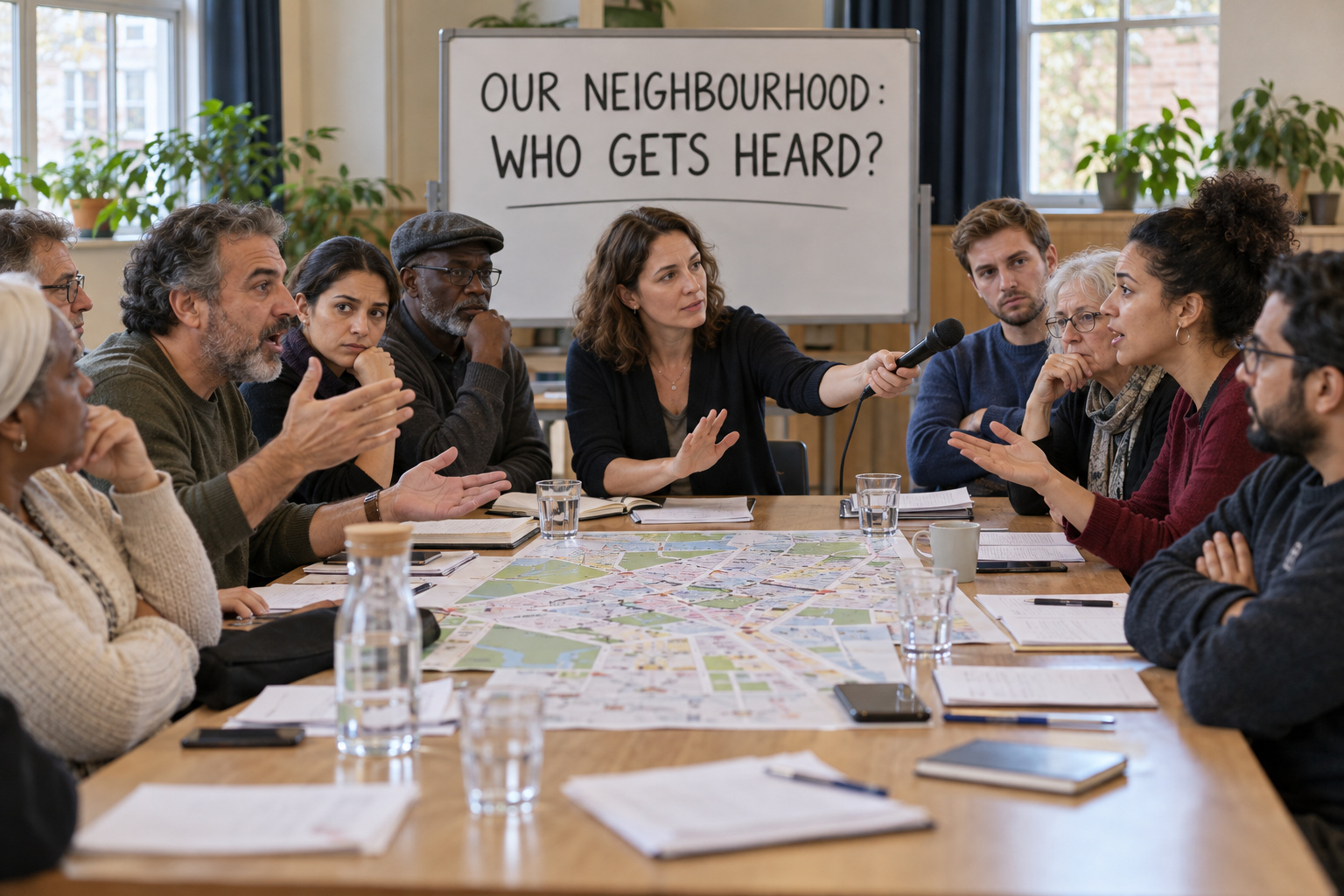
.. continue >>This photograph illustrates how participation in a community discussion does not automatically guarantee that everyone’s voice carries equal weight. Residents sit around a map of their neighbourhood while a facilitator directs a microphone towards one participant. The question on the board, “Our neighbourhood: who gets heard?”, invites reflection on whose experiences are recognised and whose contributions influence collective decisions. Prejudices, stereotypes and assumptions about language, origin or belonging can affect how people’s views are received. These dynamics may also interact with meeting procedures that give some participants more opportunities to speak than others. The image does not establish that a particular person is being discriminated against; instead, it encourages users to examine how recognition, listening and influence are distributed. For BRIDGE Social Challenge 5: Discrimination, racism and socio-cultural polarisation, including hate speech, the image helps us understand that exclusion can occur even within spaces intended to bring people together. Addressing it requires fair opportunities to contribute, active responses to dismissive or discriminatory behaviour and facilitation that ensures different perspectives receive serious consideration.
.. continue >>This graphic presents hypothetical restrictions and support measures concerning gender, religious expression, body size, children, vehicle age and the employment of people from ethnic minorities. By bringing these examples together, it invites reflection on how rules can create different conditions of access, participation and opportunity. The examples should not be understood as equivalent forms of discrimination: their purposes, contexts and practical consequences require separate examination. Some measures may exclude or stigmatise particular groups, while others may aim to reduce existing disadvantages or address a specific organisational or environmental concern. The graphic encourages users to ask who benefits, who faces additional barriers, what assumptions underpin each rule and whether less exclusionary alternatives are available. For BRIDGE Social Challenge 5: Discrimination, racism and socio-cultural polarisation, including hate speech, the image helps us understand that evaluating unequal treatment requires more than identifying a difference between groups. It requires critical attention to justification, implementation and effects. Such examination can also help prevent debates about fairness from becoming polarised around simplified claims that overlook people’s circumstances and experiences.
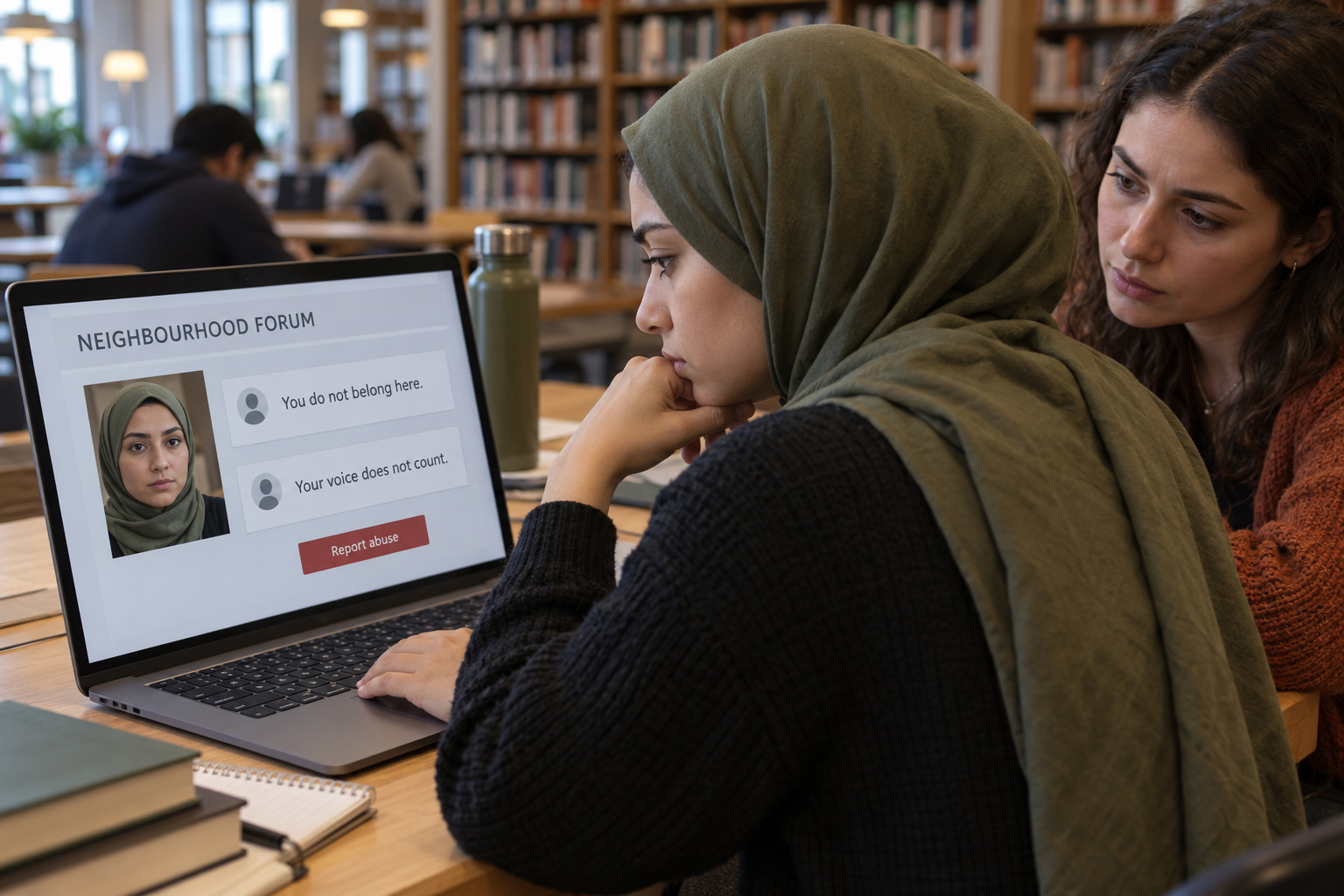
.. continue >>This photograph illustrates how hostile messages in an online community space can undermine a person’s sense of belonging and willingness to participate. A woman reads comments stating “You do not belong here” and “Your voice does not count”, while another woman sits beside her. Rather than engaging with her contribution, the messages question her right to be present and heard. The scene invites reflection on how online exclusion can reproduce prejudices and reinforce boundaries between those considered part of a community and those treated as outsiders. Although the image does not establish the motivation behind the comments, it provides a starting point for discussing racism, religious prejudice and hostility towards people because of their perceived identity. The presence of another person and the visible “Report abuse” option also draw attention to support, reporting mechanisms and the responsibilities of platform moderators and witnesses. For BRIDGE Social Challenge 5: Discrimination, racism and socio-cultural polarisation, including hate speech, the image helps us understand that online hostility can have consequences beyond the screen, affecting confidence, relationships and participation in community life. Addressing it requires responsive moderation, accessible reporting procedures and collective support that affirms the dignity and voice of those targeted.
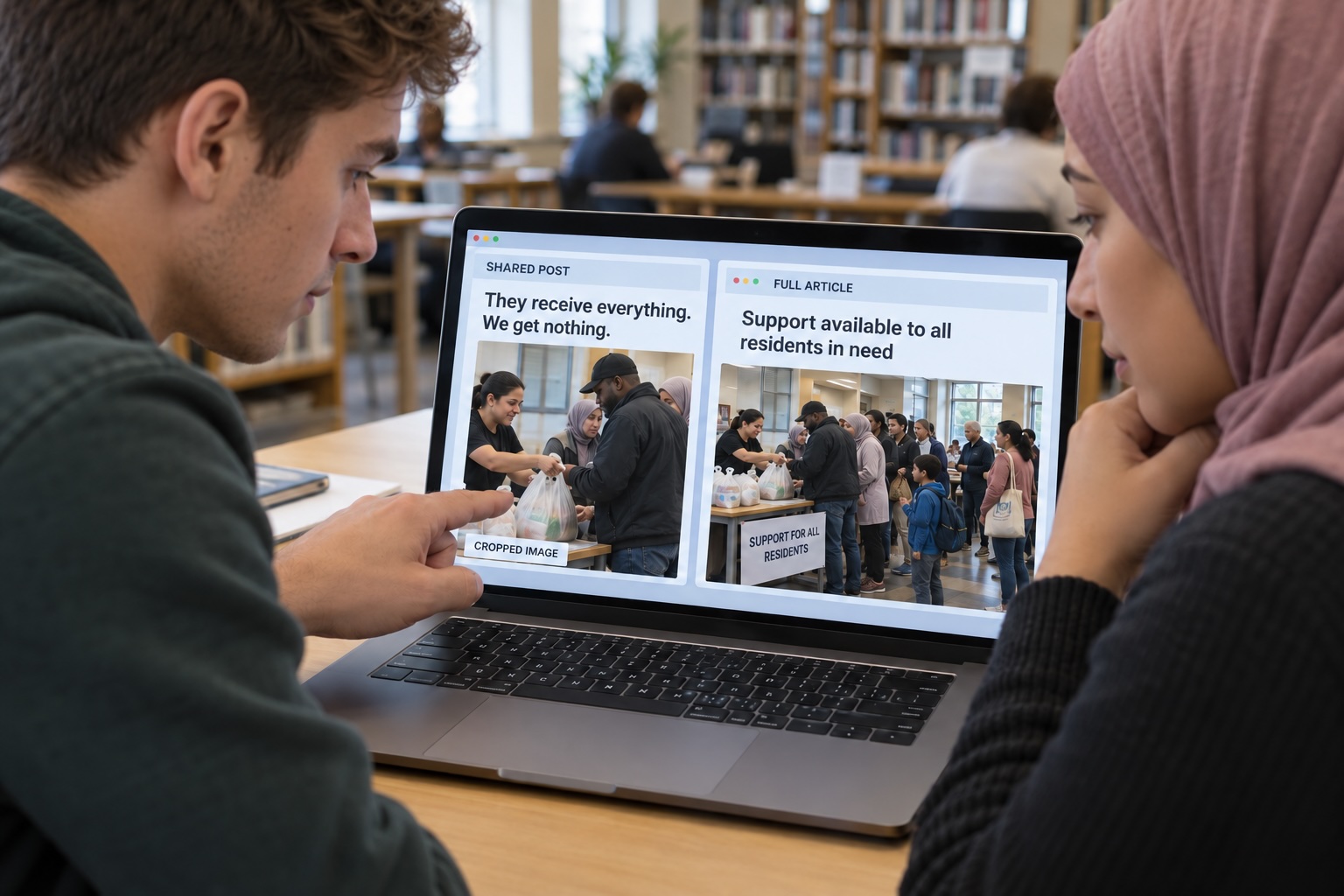
.. continue >>This photograph illustrates how selective framing and information taken out of context can encourage prejudice and deepen socio-cultural divisions. Two students compare a shared online post with a fuller account of the same situation. The post combines a cropped photograph with the claim “They receive everything. We get nothing”, while the accompanying article shows a broader scene and explains that support is available to all residents in need. The contrast invites reflection on how images and captions can construct an opposition between “us” and “them”, presenting some people as undeserving beneficiaries and others as unfairly excluded. The scene does not depict explicit hate speech; instead, it explores how misleading narratives can create conditions in which hostility towards perceived groups becomes easier to justify and circulate. The students’ comparison also highlights the importance of checking sources, examining missing context and questioning emotionally charged claims before sharing them. For BRIDGE Social Challenge 5: Discrimination, racism and socio-cultural polarisation, including hate speech, the image helps us understand that prejudice can be reinforced through selective representations of everyday situations. Addressing these processes requires critical engagement with online content, attention to whose experiences are omitted and opportunities to challenge divisive narratives without reproducing their assumptions.
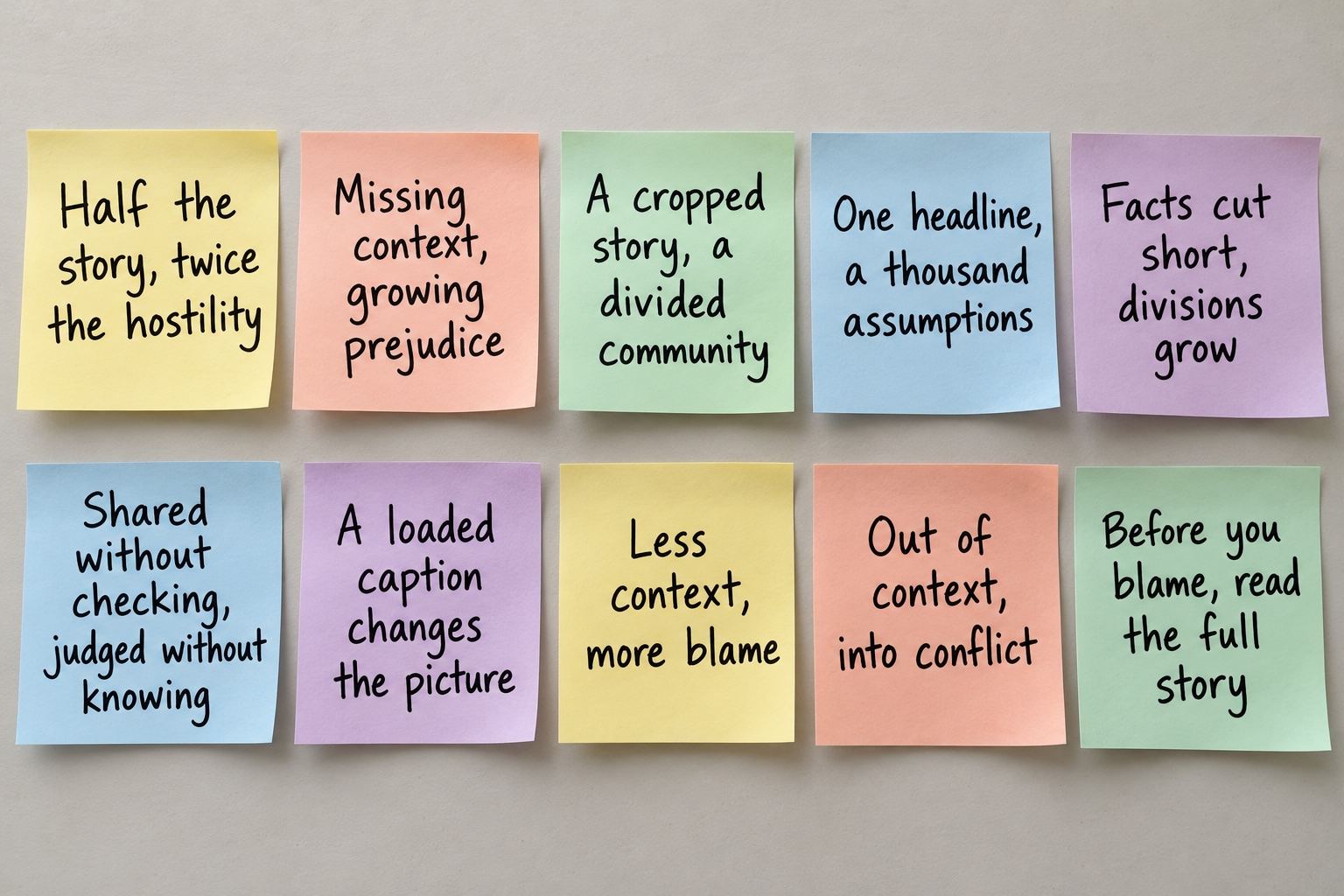
.. continue >>The image presents ten colourful sticky notes exploring how incomplete information, selective framing and unchecked sharing can contribute to prejudice and socio-cultural polarisation. Statements such as “Half the story, twice the hostility” and “A loaded caption changes the picture” invite reflection on how the presentation of information can influence perceptions of people and communities. A cropped photograph, an isolated quotation or a misleading headline may encourage judgements that the fuller context would challenge. When these representations reinforce existing stereotypes, they can strengthen divisions between “us” and “them” and make discriminatory attitudes appear justified. The notes do not present examples of hate speech themselves; they provide prompts for examining the communication practices through which prejudice and hostility may develop and circulate. Their workshop format encourages participants to discuss interpretations, question assumptions and consider their own responsibilities when sharing content. For BRIDGE Social Challenge 5: Discrimination, racism and socio-cultural polarisation, including hate speech, the image helps us understand that challenging divisive narratives requires attention to what is omitted as well as what is shown. Checking sources, seeking context and avoiding generalisations about entire groups can support more informed and respectful public discussion.
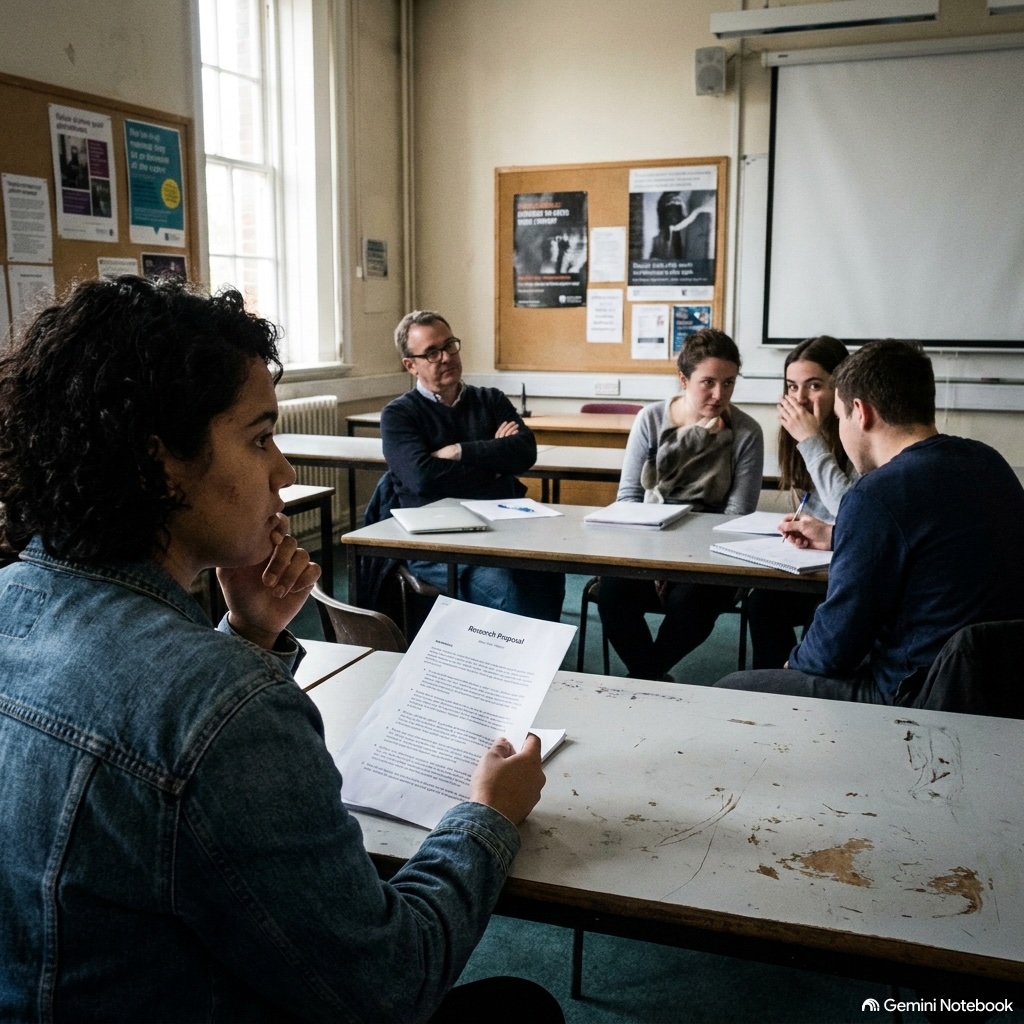
.. continue >>This photograph explores how subtle forms of exclusion can shape a person’s experience within an academic environment. A student holding academic documents stands ready to present his work, while a lecturer and other students remain at a distance in the background. Their glances, apparent whispered exchanges and physical separation invite reflection on how someone may feel scrutinised before having an opportunity to speak or demonstrate their competence. Within the intended narrative, the student represents someone from a minority or migrant background; this background cannot be established from appearance alone. Likewise, the photograph does not prove what others are thinking or whether their behaviour is motivated by prejudice. Instead, it provides a starting point for examining how implicit bias and subtle interpersonal signals can communicate doubt, distance or non-belonging. When repeated, such experiences can undermine confidence, trust and participation, even without openly hostile language. For BRIDGE Social Challenge 5: Discrimination, racism and socio-cultural polarisation, including hate speech, the image helps us understand that exclusion may operate through everyday interactions as well as explicit statements. Addressing it requires questioning assumptions about competence and belonging, reflecting on non-verbal behaviour and creating academic spaces where people can present their ideas and receive fair consideration.
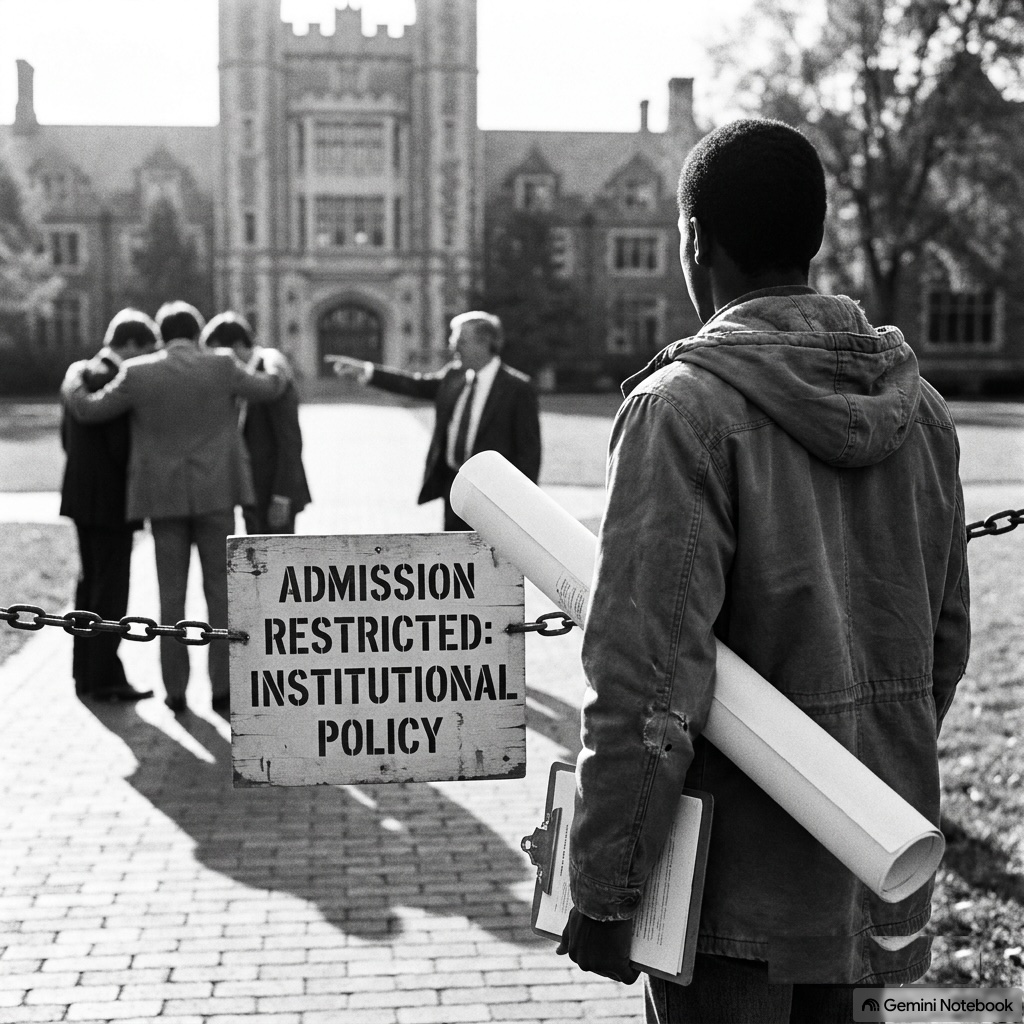
.. continue >>This image depicts a young man holding documents outside an academic institution, separated from its grounds by a chain and a sign stating “Admission restricted: institutional policy”. The contrast between his apparent readiness to participate and the physical barrier invites reflection on how institutional rules can restrict access to education and recognition. Within the intended narrative, the scene represents racial discrimination; however, the image alone does not establish the admission criteria or the motives of the people depicted. It encourages users to examine how apparently neutral policies may produce exclusion when their assumptions, application or effects disadvantage particular groups. For BRIDGE Social Challenge 5: Discrimination, racism and socio-cultural polarisation, including hate speech, the image provides a starting point for discussing institutional racism and the relationship between formal rules and equal opportunities. It highlights the importance of transparent admission procedures, accountable decisions and effective opportunities to challenge discriminatory treatment.
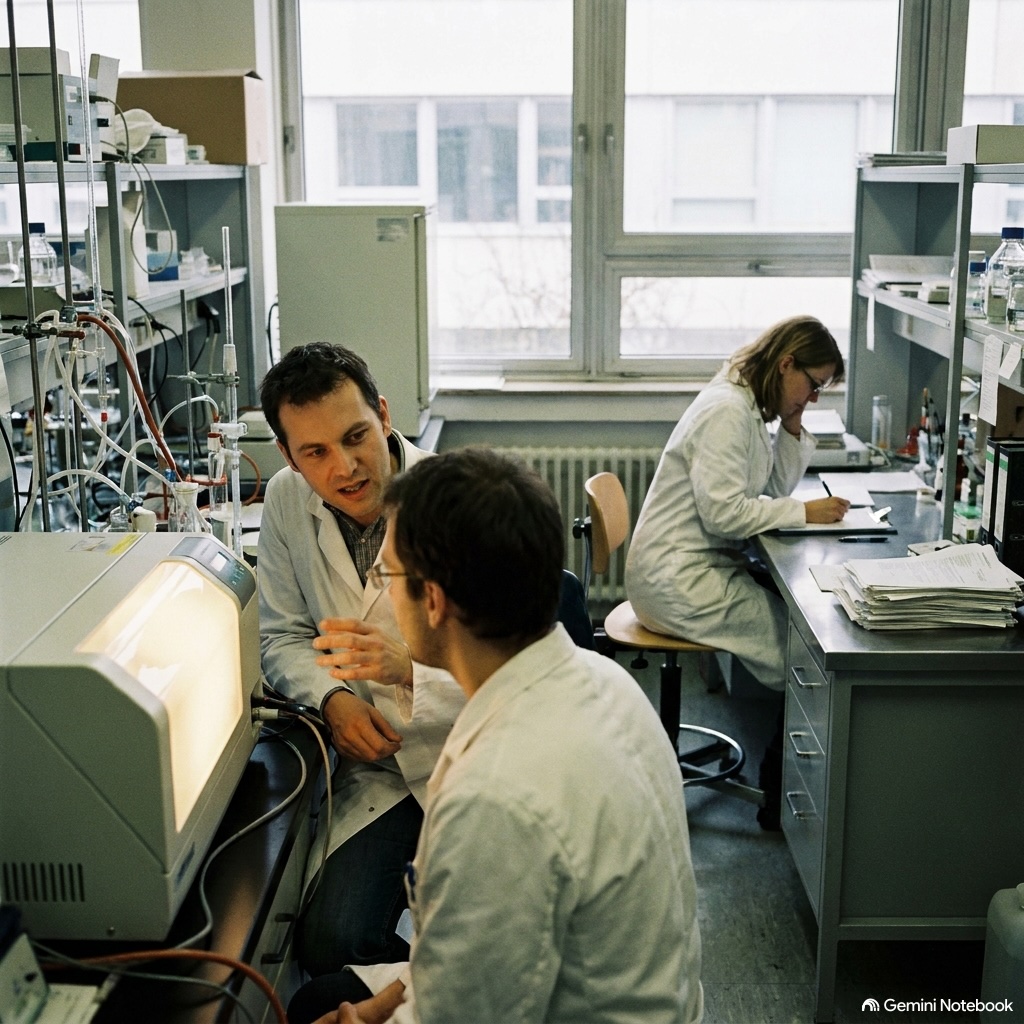
.. continue >>This photograph explores how the distribution of tasks within a research team can create unequal opportunities for recognition and career development. In the foreground, a woman researcher in a laboratory coat records information on a clipboard, while male colleagues operate advanced equipment and present findings to an evaluator or senior academic. Within the intended narrative, this division represents a gendered allocation of responsibilities in which women undertake essential organisational and administrative work while men occupy more visible scientific roles. The image does not establish the researchers’ qualifications or whether these responsibilities are shared over time. Instead, it invites users to ask who gains access to equipment, who presents results and whose contribution is recognised. Administrative and coordination tasks are necessary to research, but their repeated assignment to particular team members can limit opportunities to develop technical expertise, lead projects and demonstrate achievements. For BRIDGE Social Challenge 5: Discrimination, racism and socio-cultural polarisation, including hate speech, the image helps us understand that gender discrimination may operate through routine decisions about work allocation and recognition. Addressing these patterns requires transparent task distribution, fair access to research resources and explicit acknowledgement of the contributions that sustain collective scientific work.
.. continue >>