The project Bridge is co-funded by the European Union. Views and opinions expressed are however those of the author(s) only and do not necessarily reflect those of the European Union or the Servicio Espanol para la Internacionalizacion de la Educacion (SEPIE). Neither the European Union nor the National Agency SEPIE can be held responsible for them. -- Number: 2025-1-ES01-KA220-HED-000359236 --

A museum. Seven Challenges. Four spaces to learn and transform

Documentary Photography

This is a collection of photographs or images related to the selected social challenge. Each image is accompanied by a brief description or narrative explaining its meaning and connection with the challenge.

A.2. Gap between regulatory frameworks, institutional discourses and actual inclusion practices   Show all

The images selected for Social Challenge 2 aim to depict the gap between the regulatory frameworks that commit higher education institutions to inclusion and the everyday practices through which inclusion is, or is not, actually experienced on campus. Their purpose is to help identify and… Read more >>

Policies on Paper, Absent in Daily Campus Life

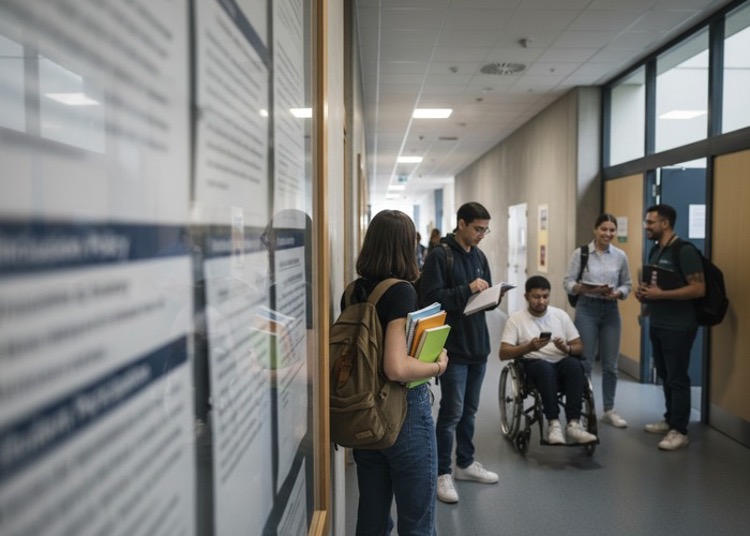
This image represents the coexistence of formal inclusion commitments and their weak presence in everyday academic life. The corridor functions as a transitional institutional space: policies exist physically within the university environment, yet they remain marginal to the lived routines of students. The composition symbolises the gap between regulation and practice by placing official inclusion discourse in the visual background while social and academic life unfolds independently of it. The intercultural and intersectional dimensions are expressed through a naturally diverse student body, including visible disability, ethnic plurality, gender balance and varied social identities, all presented without theatricalisation. The image is relevant for the BRIDGE Project because it visualises a common institutional paradox: inclusion is officially acknowledged, but not meaningfully embedded in ordinary interactions, services and campus culture. As part of a European higher education reflection, it encourages viewers to question whether policy visibility actually translates into structural everyday belonging.

.. continue >>
Source: Image generated with artificial intelligence based on an iconographic description by the University of Siena
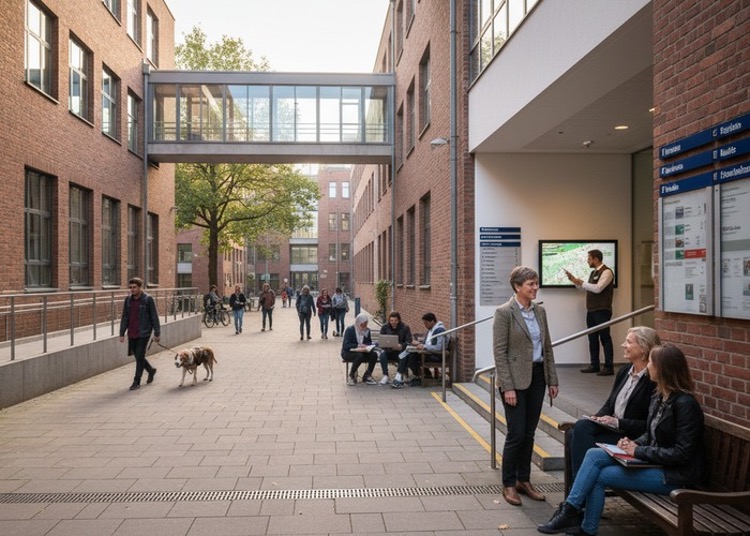
Inclusive Language, Inaccessible Reality

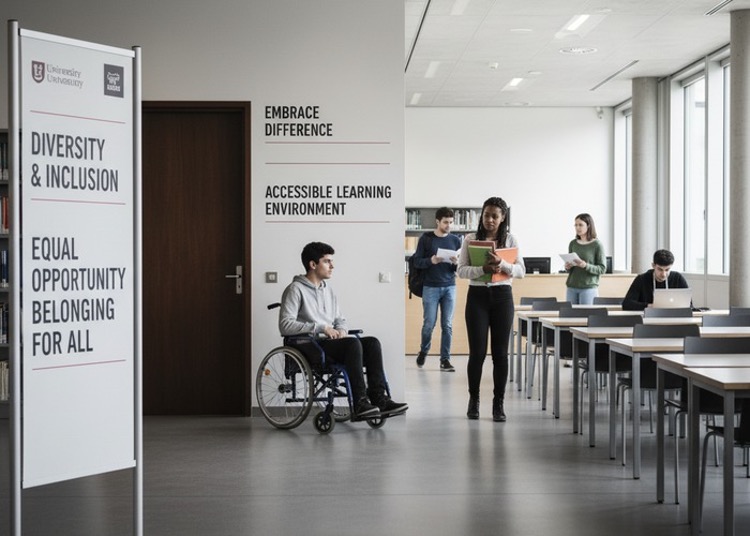
This scene foregrounds the contradiction between institutional declarations of inclusion and the material realities of inaccessible academic spaces. The image focuses on a threshold, a meaningful symbolic choice because access is both physical and social. While the university may communicate a progressive commitment to diversity, the partial inaccessibility of the entrance shows how exclusion can persist through mundane infrastructural failures. The image incorporates intersectional representation by showing students with different embodied experiences, including mobility and visual access needs, within a broader diverse academic community. Rather than isolating disability, the composition situates it within ordinary university participation, making the exclusion more structurally visible. For the BRIDGE Project, the image is especially useful because it makes the abstract concept of implementation failure immediately legible without resorting to dramatic or pity-based imagery. In the context of European higher education, it invites reflection on how inclusion cannot be reduced to discourse; it must be enacted through concrete design, accessibility and institutional accountability.

.. continue >>
Source: Image generated with artificial intelligence based on an iconographic description by the University of Siena
Committed Staff, Insufficient Support

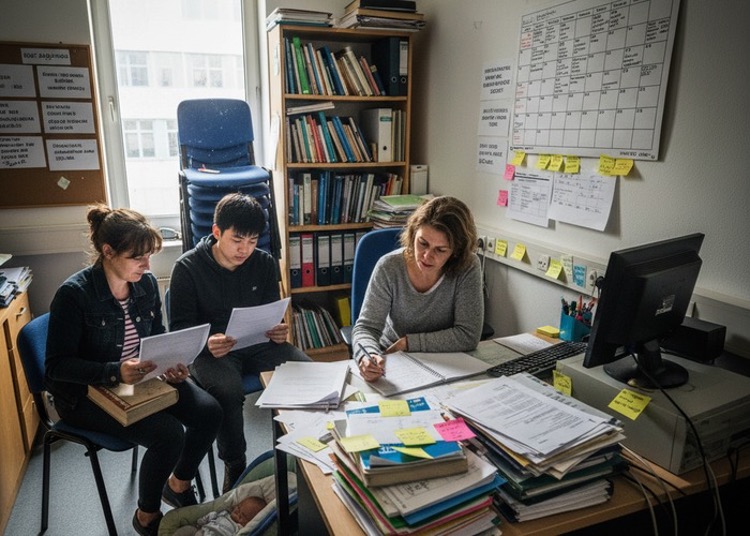
This image portrays university staff as willing actors within constrained institutional systems. Rather than presenting exclusion as a result of individual indifference, it highlights a more complex reality: professionals may be personally committed to inclusive practice while lacking adequate material, organisational and policy support. The visual tension emerges from the contrast between human engagement and the surrounding evidence of insufficiency. The scene includes students with diverse backgrounds and embodied experiences, showing intersectionality as a normal component of educational support rather than a special category. Visible and less visible differences coexist within the same institutional encounter, underscoring that inclusion requires nuanced, sustained infrastructure. The image is relevant for the BRIDGE Project because it resists simplistic blame narratives and instead illustrates the systemic under-resourcing that often weakens implementation. In European higher education debates, this visual can support reflection on the need to align inclusive ambitions with staffing, training, time and institutional investment, rather than depending solely on individual goodwill.

.. continue >>
Source: Image generated with artificial intelligence based on an iconographic description by the University of Siena
Inclusion After the Project Ends

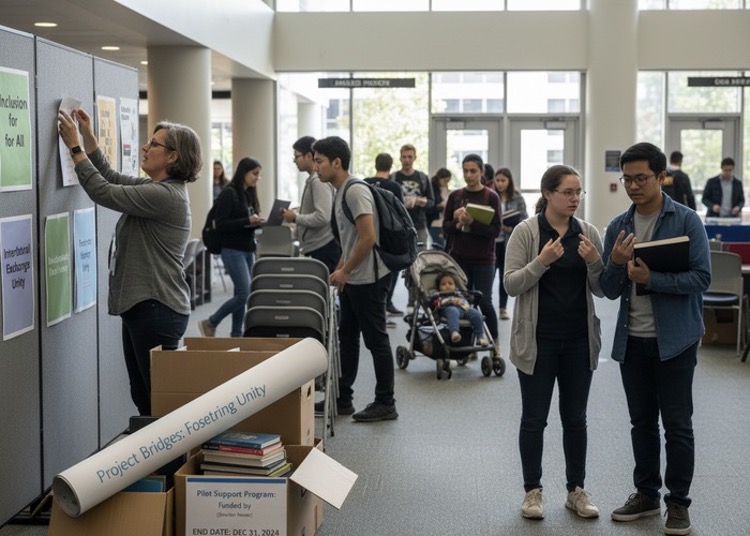
This image captures the fragility of inclusion initiatives that depend on temporary project cycles rather than permanent institutional commitment. The scene suggests that something valuable once existed in this space, but its continuity has not been secured. The absence of active engagement becomes the central message: inclusion can disappear not through open rejection, but through the quiet withdrawal of resources and institutional attention. The image remains socially diverse even in a subdued setting, reinforcing that the consequences of discontinuity affect a wide range of students, particularly those whose participation depends on supportive structures. Intersectionality is present not as a visual checklist but as a social reality that requires sustained care. For the BRIDGE Project, this image is important because Erasmus+ and similar initiatives often generate innovation, yet their long-term impact depends on institutional embedding. In the context of European higher education, the image encourages critical reflection on sustainability, asking whether inclusive practices are temporary experiments or enduring features of university culture.

.. continue >>
Source: Image generated with artificial intelligence based on an iconographic description by the University of Siena
Included in Principle, Excluded in Experience

This image focuses on the difference between formal presence and meaningful participation. The students are all in the same space, suggesting that access has technically been granted, yet the subtle body language of detachment points to unequal experiences of belonging. This distinction is crucial: inclusion is not achieved simply by opening the door, but by creating conditions for relational, communicative and emotional participation. The scene highlights intercultural and intersectional diversity in an everyday setting, showing multiple identities without reducing anyone to a symbolic role. Social exclusion is conveyed through interaction patterns rather than overt hostility, making the image especially relevant for nuanced discussion in the BRIDGE Project. It supports reflection on how marginalisation in higher education often operates through silence, informal norms and unexamined habits rather than explicit discrimination alone. Within the European university context, the image can prompt dialogue about how institutions measure inclusion, and whether they attend sufficiently to students' lived experience beyond formal enrolment and representation.

.. continue >>
Source: Image generated with artificial intelligence based on an iconographic description by the University of Siena
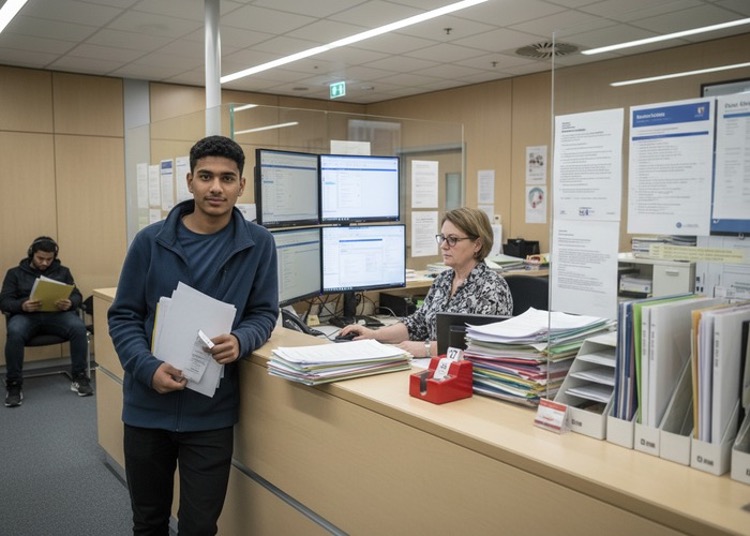
When Procedure Replaces Inclusion

This image symbolises the bureaucratisation of inclusion, where procedural compliance risks replacing meaningful human support. The administrative setting is intentionally ordinary: exclusion here is not spectacular, but embedded in systems, forms, waiting times and impersonal routines. The image suggests that institutions may appear organised and formally responsive while still failing to address the complexity of students' real needs. A diverse student population is shown in ways that reflect the plurality of European higher education, including differences in age, mobility, disability and cultural background. Intersectionality matters here because bureaucratic systems rarely affect everyone equally; those with more complex identities or needs often face greater administrative burden. For the BRIDGE Project, this image is valuable because it visualises a key institutional challenge: inclusion can be reduced to process management rather than relational practice or structural transformation. In higher education reflection, it helps frame a discussion about whether universities are building supportive environments or merely documenting their intention to do so.

.. continue >>
Source: Image generated with artificial intelligence based on an iconographic description by the University of Siena
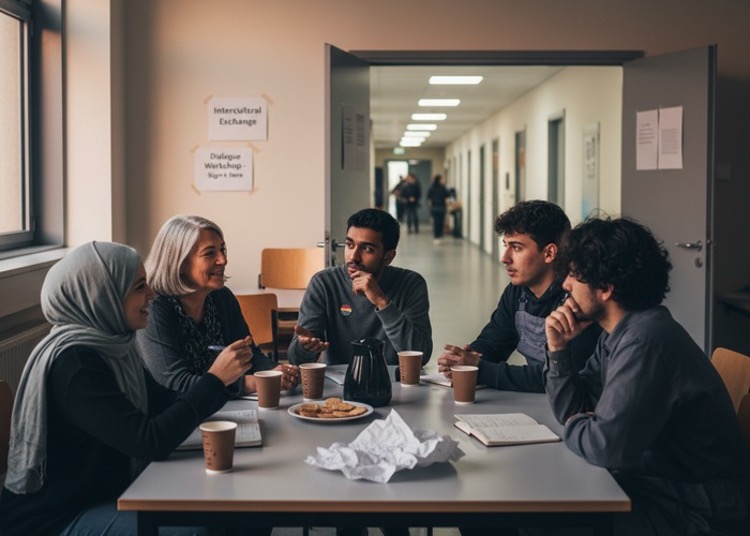
Dialogue Sustained by Individuals, Not Structures

This image represents the dependence of intercultural dialogue on personal initiative rather than institutional structure. The conversation appears meaningful and sincere, yet its limited scale suggests fragility: such exchanges occur because certain individuals choose to create them, not because the university systematically guarantees them. The image therefore conveys both value and vulnerability. Intercultural and intersectional dimensions are central to the composition, with participants reflecting multiple social positions and experiences. The scene avoids celebratory simplification by showing dialogue as real work that requires time, trust and facilitation. It is especially relevant for the BRIDGE Project because it highlights a frequent gap in higher education: diversity may be present on campus, but meaningful dialogue is often under-supported and unevenly distributed. In a European context marked by mobility, pluralism and democratic challenges, the image supports reflection on how universities can move beyond isolated good practices toward durable institutional ecosystems that make inclusive exchange an ordinary component of academic life.

.. continue >>
Source: Image generated with artificial intelligence based on an iconographic description by the University of Siena
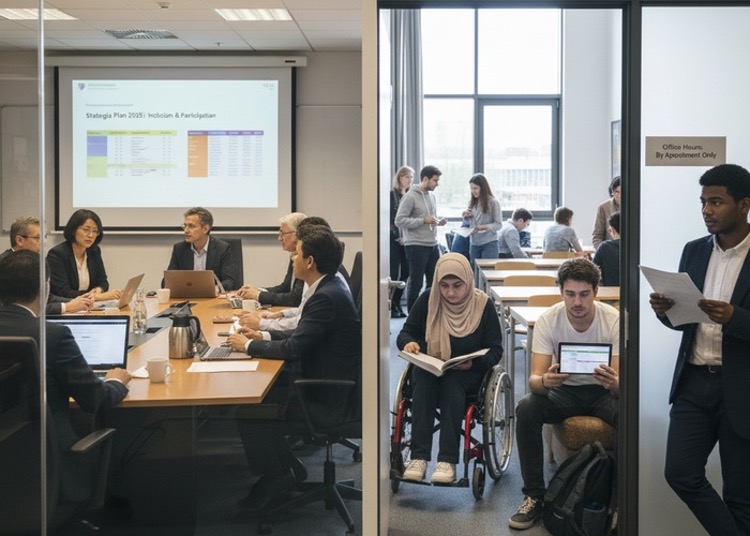
Leadership Vision, Student Reality

This image visualises the distance between institutional governance and the everyday realities of students. By holding both groups within the same frame while separating them spatially, the composition suggests that policy-making and lived experience coexist without fully meeting. The image does not portray governance as hostile; rather, it reveals disconnection, a subtle but powerful form of institutional gap. The students represented outside the formal decision-making space reflect a broad range of social identities and needs, reminding viewers that inclusion policy affects complex human realities. The juxtaposition invites an intersectional reading: those furthest from power are often those most affected by implementation failures. For the BRIDGE Project, this image is particularly useful because it makes structural distance visible without resorting to confrontation. In European higher education discussions, it can support reflection on participatory governance, student voice and the necessity of grounding institutional strategies in the daily textures of academic and social life.

.. continue >>
Source: Image generated with artificial intelligence based on an iconographic description by the University of Siena
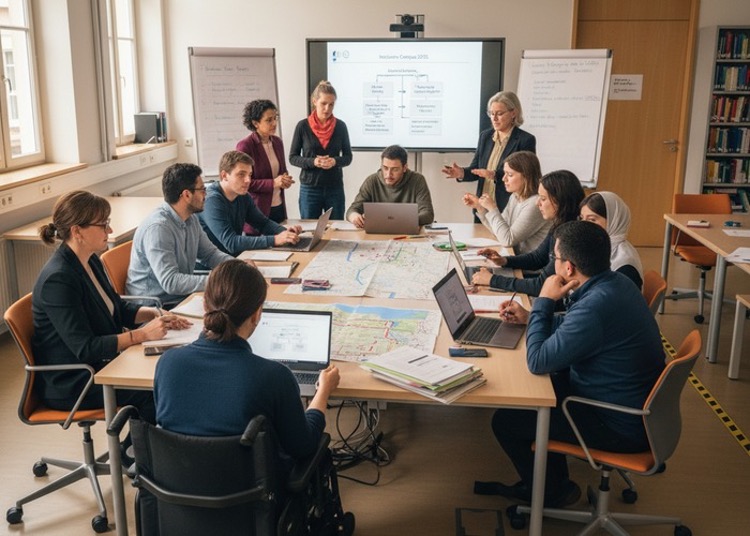
Designing Inclusion Together

This image shifts from diagnosis to collective re-imagination. It represents a collaborative process in which inclusion is not designed for students but with them, alongside staff and decision-makers. The roundtable composition symbolises shared responsibility and the dismantling of rigid institutional hierarchies. Unlike earlier images, the emphasis here is on process, participation and mutual listening. The group reflects intersectional diversity across role, age, background, disability and identity, reinforcing the principle that effective inclusion emerges from plural knowledge. The accessible environment is also significant: inclusive practice is represented not only in who is present, but in how the space enables equal participation. For the BRIDGE Project, this image is highly relevant because it embodies the project's educational and democratic aspirations. Within European higher education, it encourages reflection on co-creation as a method for translating policy into practice. The image suggests that genuine implementation requires dialogue, shared design and institutional willingness to redistribute voice and responsibility.

.. continue >>
Source: Image generated with artificial intelligence based on an iconographic description by the University of Siena
Inclusion as Everyday University Culture

This image portrays a thriving contemporary European university where inclusive everyday academic life functions smoothly. Diverse students and staff naturally interact in an accessible and welcoming space, with wheelchair access fully integrated and quiet support for visual and hearing needs visible without emphasis. Intercultural interaction, collaborative study, and administrative and academic environments appear aligned, presented in an authentic and hopeful yet realistic tone. For the BRIDGE Project, this image works as the concluding vision of the series: it does not depict an idealised fantasy but a plausible, achievable outcome once regulatory frameworks and daily institutional practice are genuinely aligned. Within the European higher education debate, it offers a constructive horizon, showing what it looks like when inclusion becomes an ordinary, unremarkable feature of university culture rather than a special initiative.

.. continue >>
Source: Image generated with artificial intelligence based on an iconographic description by the University of Siena