The project Bridge is co-funded by the European Union. Views and opinions expressed are however those of the author(s) only and do not necessarily reflect those of the European Union or the Servicio Espanol para la Internacionalizacion de la Educacion (SEPIE). Neither the European Union nor the National Agency SEPIE can be held responsible for them. -- Number: 2025-1-ES01-KA220-HED-000359236 --

A museum. Seven Challenges. Four spaces to learn and transform

Documentary Photography

This is a collection of photographs or images related to the selected social challenge. Each image is accompanied by a brief description or narrative explaining its meaning and connection with the challenge.

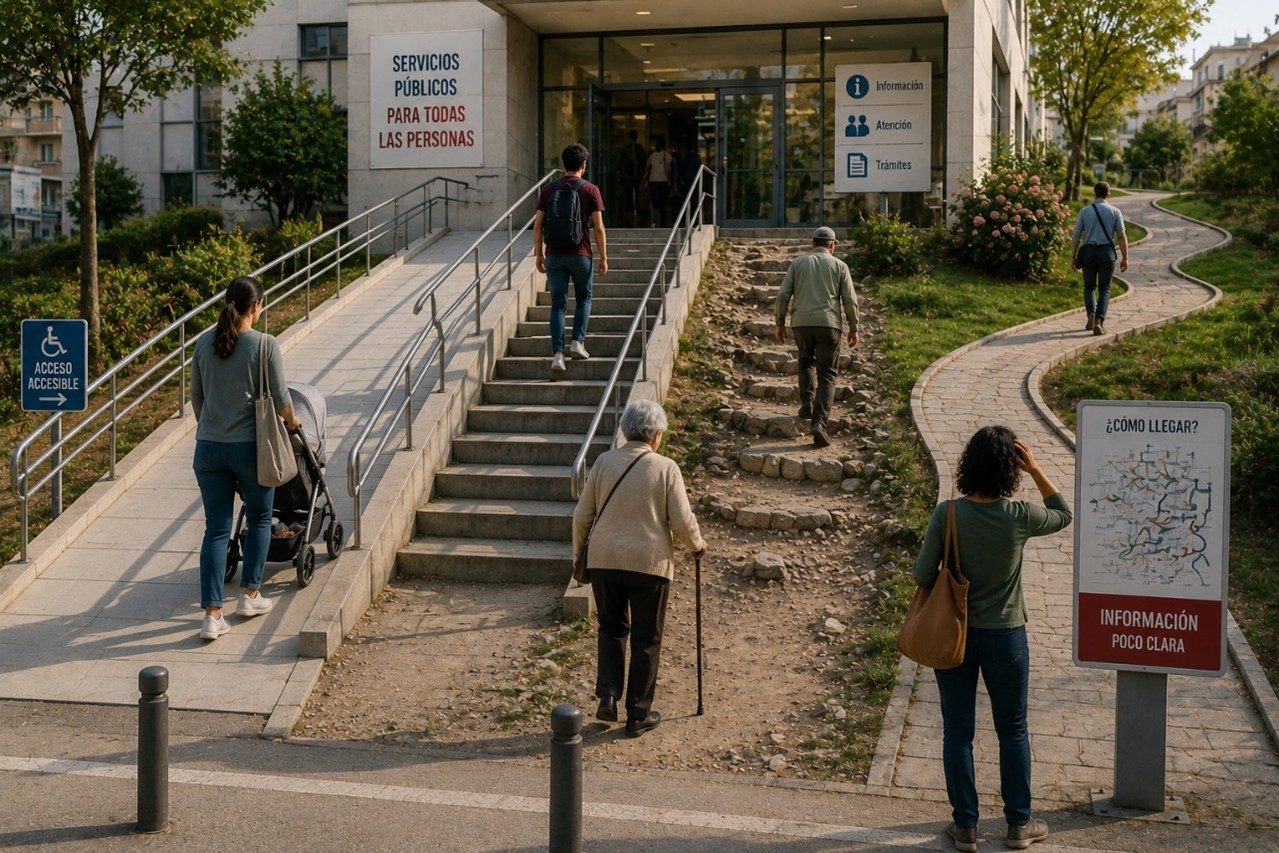
The same door, different obstacles

This photograph illustrates how formal access to the same service does not guarantee that everyone can use it on an equal footing. Although the destination is the same, the routes to reach it present varying levels of difficulty and demonstrate how age, mobility, care responsibilities, the accessibility of information or other circumstances can interact with the characteristics of the environment. Inequality thus arises from the relationship between people’s circumstances and an environment that can either facilitate or hinder their participation. The image thus shifts the focus from individual capabilities to the social, physical and organisational barriers that determine access to resources and opportunities. For Challenge A1, the image helps to illustrate a central idea of Challenge 1: equity does not consist of offering everyone exactly the same path, but rather of identifying and transforming the barriers that create unequal conditions of access and participation.

.. continue >>
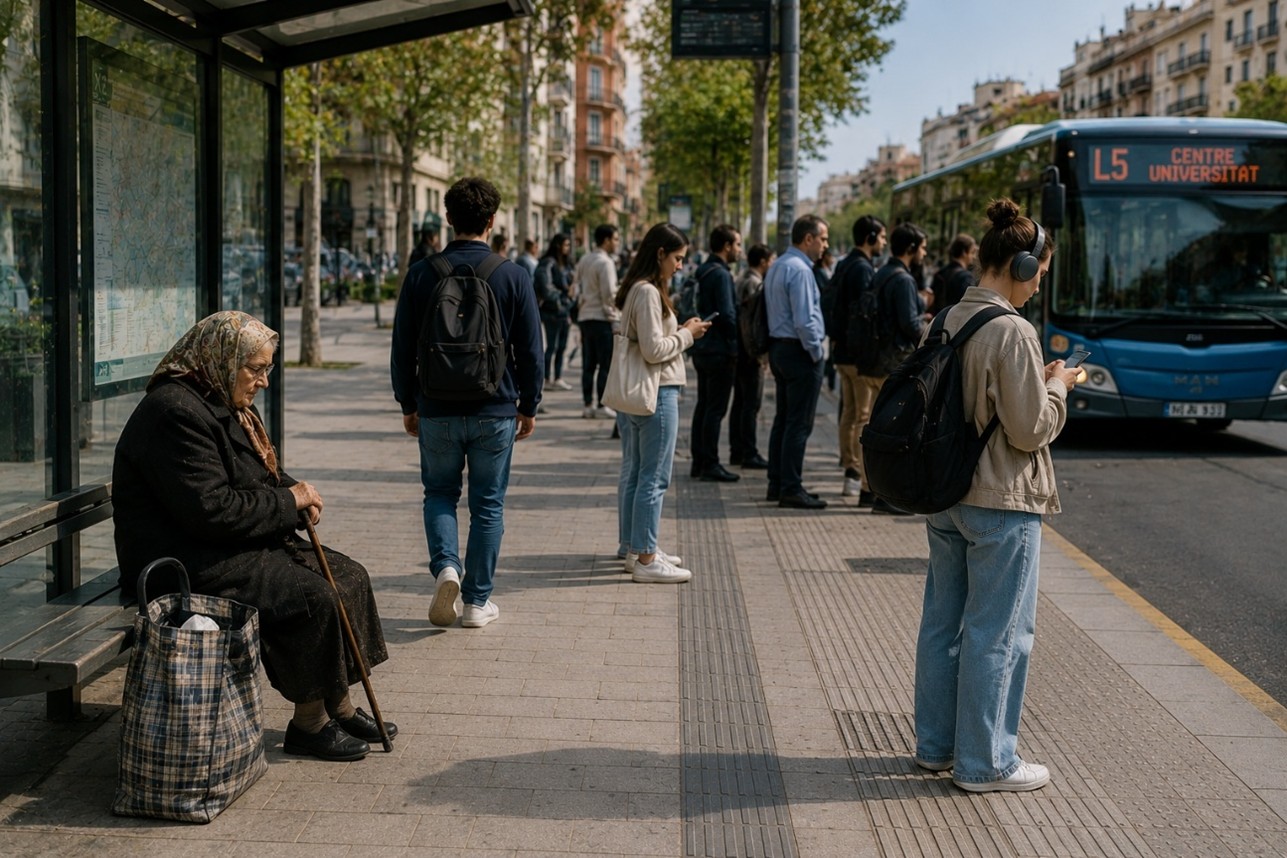
Same transport, different possibilities for access

This photograph illustrates how a public service that appears to be available to everyone can offer very different actual possibilities for access and use. At the same transport stop, people of different ages, social backgrounds, digital skills and mobility needs come together. Whilst some can easily look up information, plan their journeys and manage independently, others may encounter barriers related to age, language, accessibility, technological proficiency or their socio-economic circumstances. These barriers can be exacerbated when various factors interact; for example, when a language barrier is combined with information available exclusively in digital form, or when a mobility limitation coincides with an environment that is not very accessible. The image illustrates that the existence of a shared resource does not in itself guarantee equal opportunities. For Challenge A1, the image shows how structural inequalities also arise when services designed in an apparently neutral way fail to take into account the diversity of circumstances, abilities and resources of the people who are expected to use them.

.. continue >>
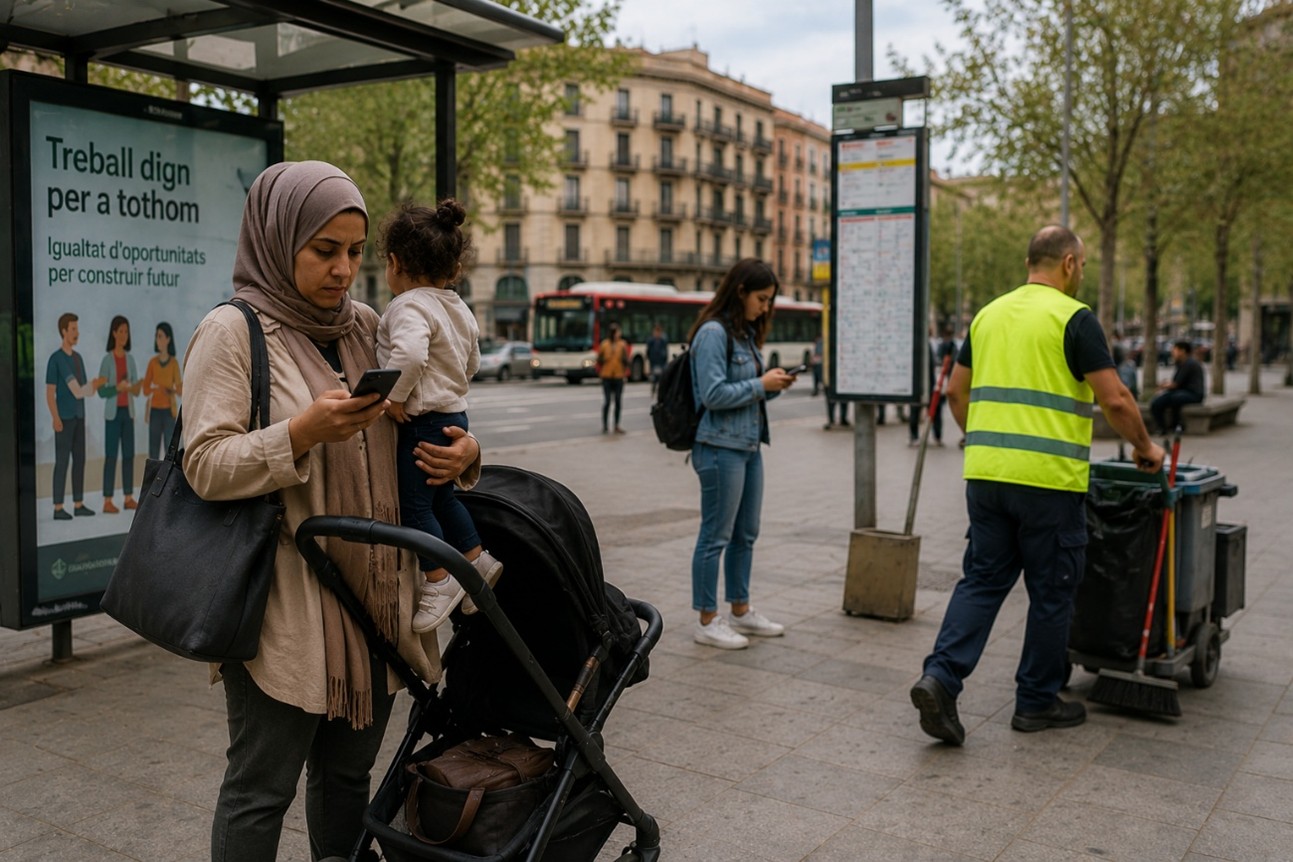
When inequalities intersect

This photograph illustrates how different factors of inequality can operate simultaneously in everyday life. The scene shows a woman with caregiving responsibilities in a socially diverse setting, shared by people in different employment, family and social situations. The image alone does not reveal each person’s background, origin or specific circumstances; precisely for this reason, it also invites us to distinguish between what we observe and the categories or assumptions we project onto those depicted. Gender, origin, socio-economic status, caregiving responsibilities, working conditions and access to resources and services can interact, creating different opportunities and challenges. The image encourages us to avoid explanations based on a single factor and to understand inequality from an intersectional perspective. For Challenge A1, the image helps to illustrate a central idea: inequalities do not operate in isolation, but intersect and can produce different experiences and effects depending on each person’s position and circumstances.

.. continue >>
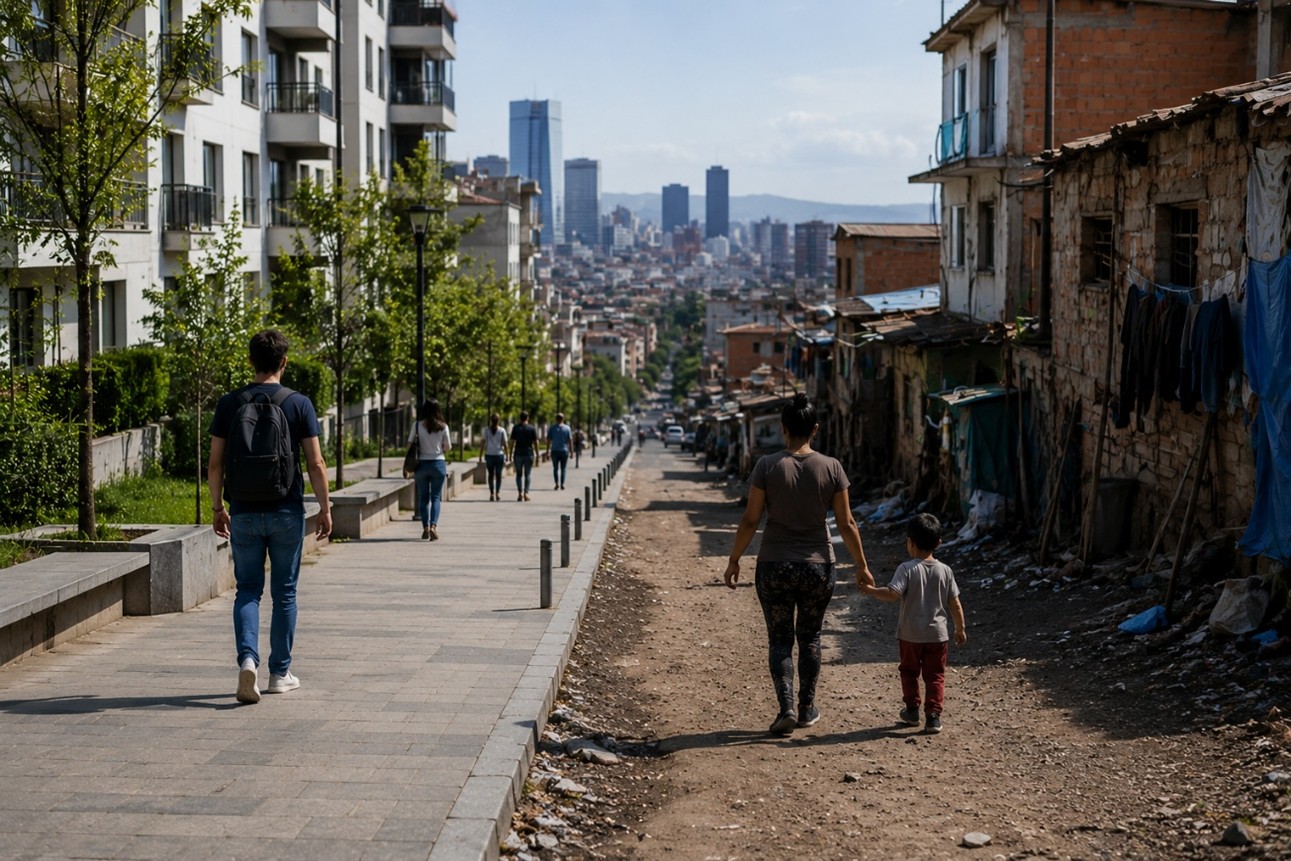
Same city, different starting points

This photograph illustrates how structural inequalities can manifest themselves within the same urban environment. Spatial proximity contrasts with differences in the quality of housing, infrastructure, public space and access to services, facilities and opportunities. People move through the same city, but they do so from different social and economic circumstances that may influence their opportunities, well-being and access to rights and services. The image invites us to move beyond individualistic interpretations of inequality and to recognise the role of structural factors such as socio-economic status, geographical location and the unequal distribution of resources. These conditions do not automatically determine individual trajectories, but they can expand or limit real possibilities for choice and participation. For Challenge A1, the image serves to introduce a central idea: sharing the same society does not mean starting from the same conditions or having the same opportunities

.. continue >>