LEVEL 2. EXPLORE BEST PRACTICE
Introduction
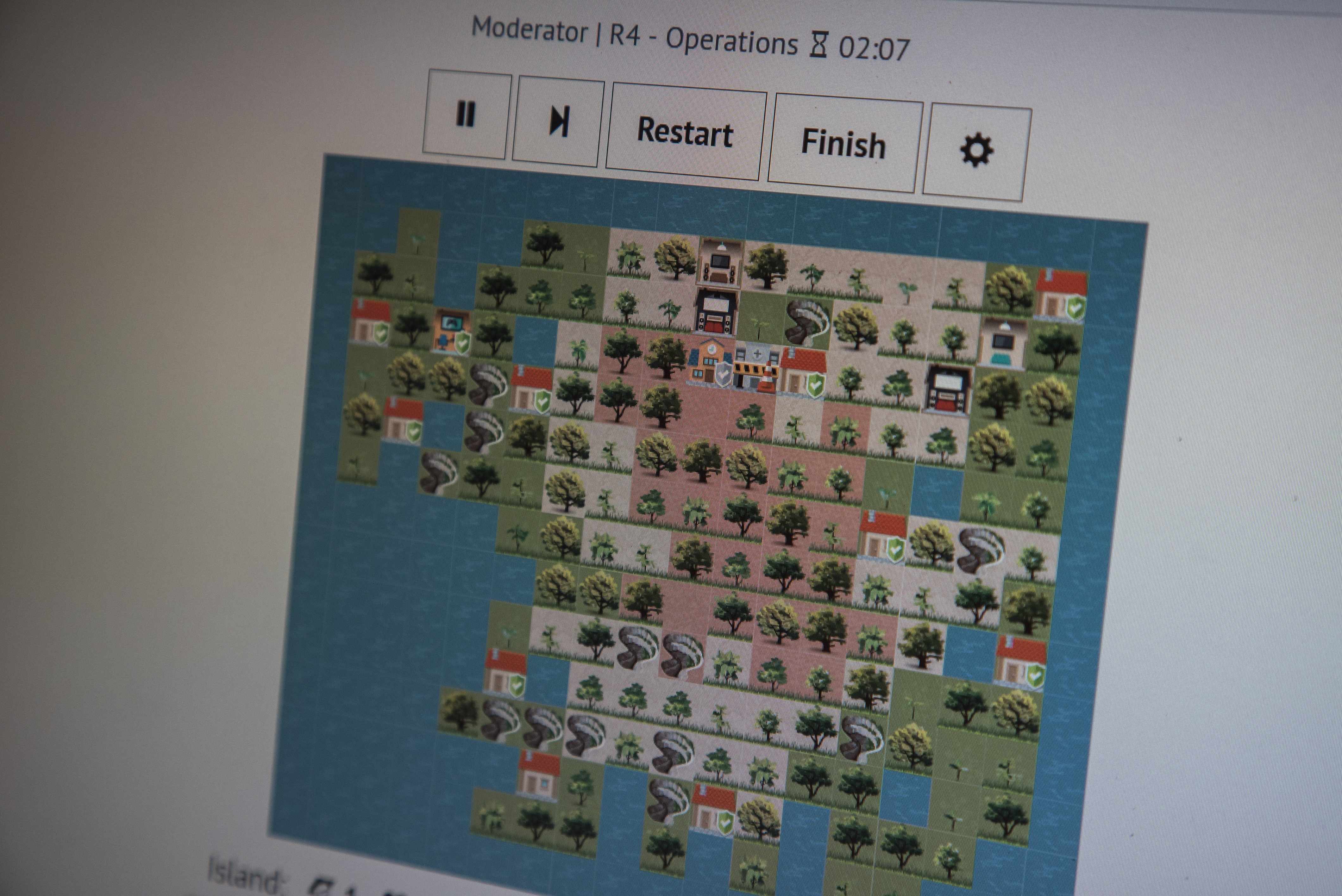
The NAURU GAME project developed New Shores, an interactive multiplayer online game that engages young people (aged 13–30) in simulated island governance to promote active citizenship. Players make collective decisions affecting ecological, social, and economic systems, developing critical thinking, collaboration, and civic responsibility. The project trained 483 educators across Poland, Hungary, and Slovakia through in-person workshops and an e-learning platform, equipping them to deliver game-based civic education.
- Coordinating organisation: Centre for System Solutions (Poland)
- Participating countries: Hungary (HU), Poland (PL), Slovakia (SK)
- Duration: 01.02.2017-31.01.2019
- BRIDGE Main Challenge: A.6. Deficits in democratic participation, representation and inclusive governance
Sustainable Development Goals (SDGs)
- SDG 4: Quality Education
- SDG 10: Reduced Inequalities
- SDG 13: Climate Action
- SDG 17: Partnerships for the Goals
Secondary Challenges
- A.3. Educational gaps throughout educational trajectories, including higher education
- A.7. Digital ecosystem, disinformation and the need for media literacy and critical thinking
The Challenge
What social issue does it address?
Youth disengagement from democratic processes and lack of practical civic competences. Young people in Poland, Hungary, and Slovakia show low participation in voting, public consultations, and civic dialogue. Post-communist legacies and insufficient participatory traditions compound theoretical, disengaging civic education curricula.
Why is it important?
Without engaged youth, democratic governance loses legitimacy and representation. Equipping young people with practical civic skills strengthens democratic institutions, reduces apathy, and addresses intergenerational representation gaps across Central Europe.
How does it contribute to the BRIDGE Challenge?
By making democratic participation tangible and appealing through interactive gameplay, the project directly reduces deficits in participation and representation. Youth gain the confidence, communication skills, and agency needed for real-world civic engagement.
How does it work?
Participants play New Shores, a multiplayer online game simulating island governance. In structured 2–3 hour sessions, they negotiate resources, cooperate, and make collective decisions. A guided debriefing phase connects gameplay to real civic contexts. Educators are trained through a 9-step e-learning course, workshops, and facilitator guides.
What might inspire you?
Ideas for adaptation
- Use simulation to make democratic decision-making tangible for students
- Replace boring lectures on citizenship with experiential, game-based workshops
- Foster intercultural dialogue through shared multiplayer challenges
- Link in-game decisions to real sustainability and governance issues
- Make civic education accessible across borders via a digital platform
- Teach systems thinking by placing learners inside interdependent simulations
Resources created
New Shores – A Game for Democracy
Interactive game
A multiplayer online game set on a simulated island where players make collective decisions affecting ecological, social, and economic systems. Designed for groups of 15–30 participants, it develops critical thinking, collaboration, civic responsibility, and understanding of democratic and sustainability challenges. The game is played in 2–3 hour structured sessions facilitated by a trained educator. It accommodates diverse learning styles and supports intercultural dialogue among youth from different countries.
Teaching staff, Students
https://systemssolutions.org / [email protected] (contact for access)
Methodology Guide
Teaching guide
A comprehensive guide presenting the theoretical framework (systems thinking, experiential learning, game-based learning), pedagogical rationale, implementation process, and practical recommendations for educators and youth workers. Includes facilitator instructions, debriefing protocols, and guidance on adapting the game to different educational contexts and learning objectives.
Teaching staff, Professionals
https://systemssolutions.org/
E-learning Course for Educators (9 steps)
Online training
A structured 9-step online course designed to train educators and youth workers in facilitating New Shores workshops. The course covers the game mechanics, pedagogical foundations, facilitation techniques, and debriefing strategies. A total of 335 users registered and completed the course. Available on the project's e-learning platform, it allows independent, self-paced learning and supports continuous access for new educators beyond the original project duration.
Teaching staff, Professionals
https://systemssolutions.org/; E-learning platform URL – to be confirmed by Centre for System Solutions
Workshop Scenarios
Educational resource
Ready-to-use workshop scenarios designed for use alongside the New Shores game. Each scenario provides a structured sequence of activities, facilitation prompts, and debriefing questions tailored to different learning objectives (e.g., sustainability, civic engagement, social skills). Scenarios are adaptable in complexity and thematic focus, making them applicable across both formal and non-formal educational settings.
Teaching staff, Students
https://systemssolutions.org/; Available through project partners: [email protected]